Bulk Landscape Materials, Sorted From Armor Stone to Sand
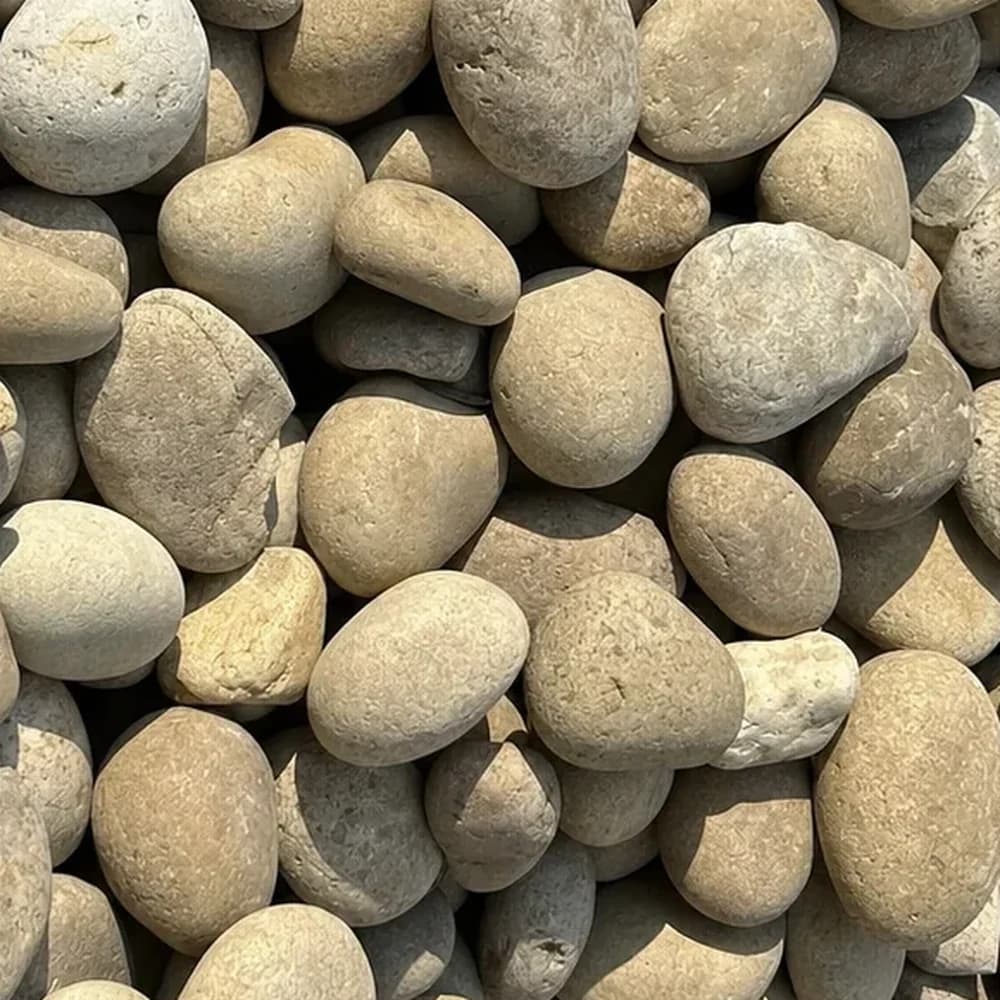
River Rock
A common mistake in Michigan is hiding River Rock where its smooth, rounded form cannot finish a visible drainage or landscape area. Size: 1 inch to 3 inches. Type: Smooth, naturally rounded stones. Color: Tans, grays, browns and occasional reds.
Free Delivery
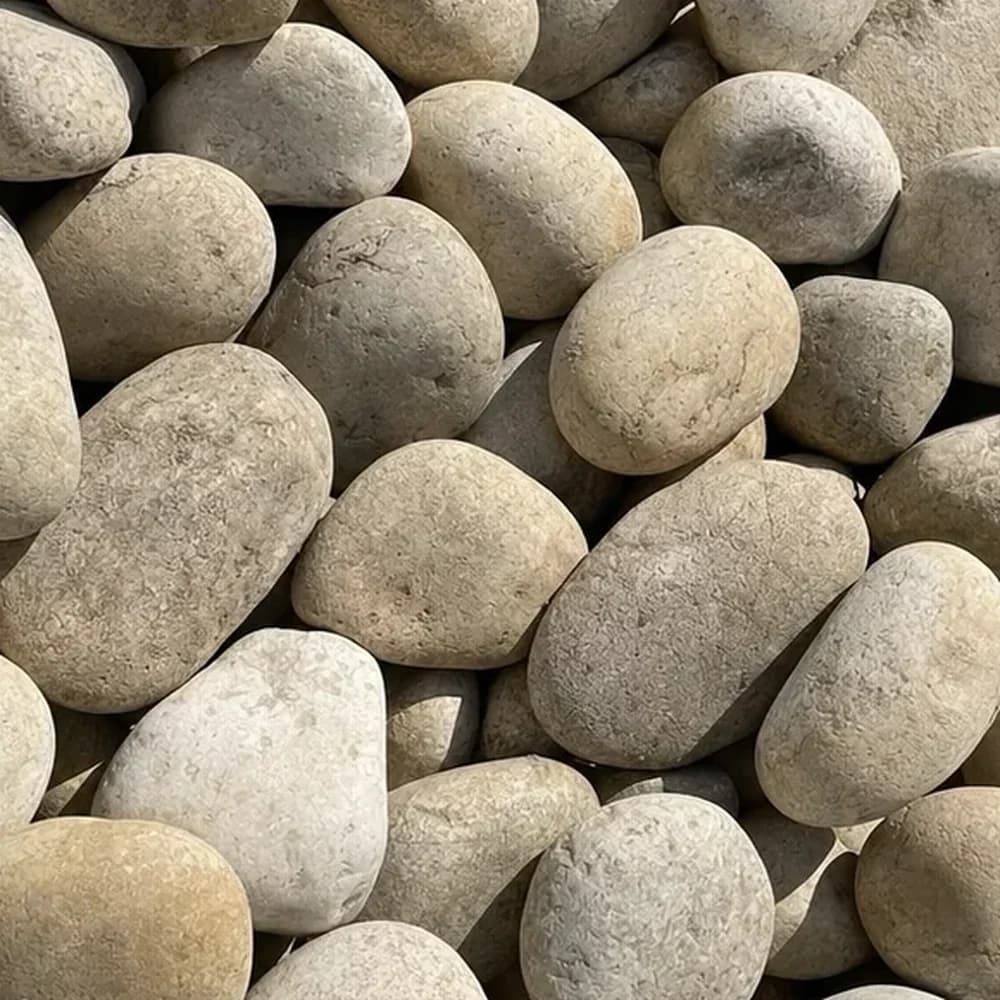
Large River Rock
After settling into a landscape feature, Large River Rock gives Michigan projects a broad, water-worn focal point that does not look slight. Size: 2 inches to 4 inches. Type: Smooth, naturally rounded stones. Color: Tans, grays and browns.
Free Delivery
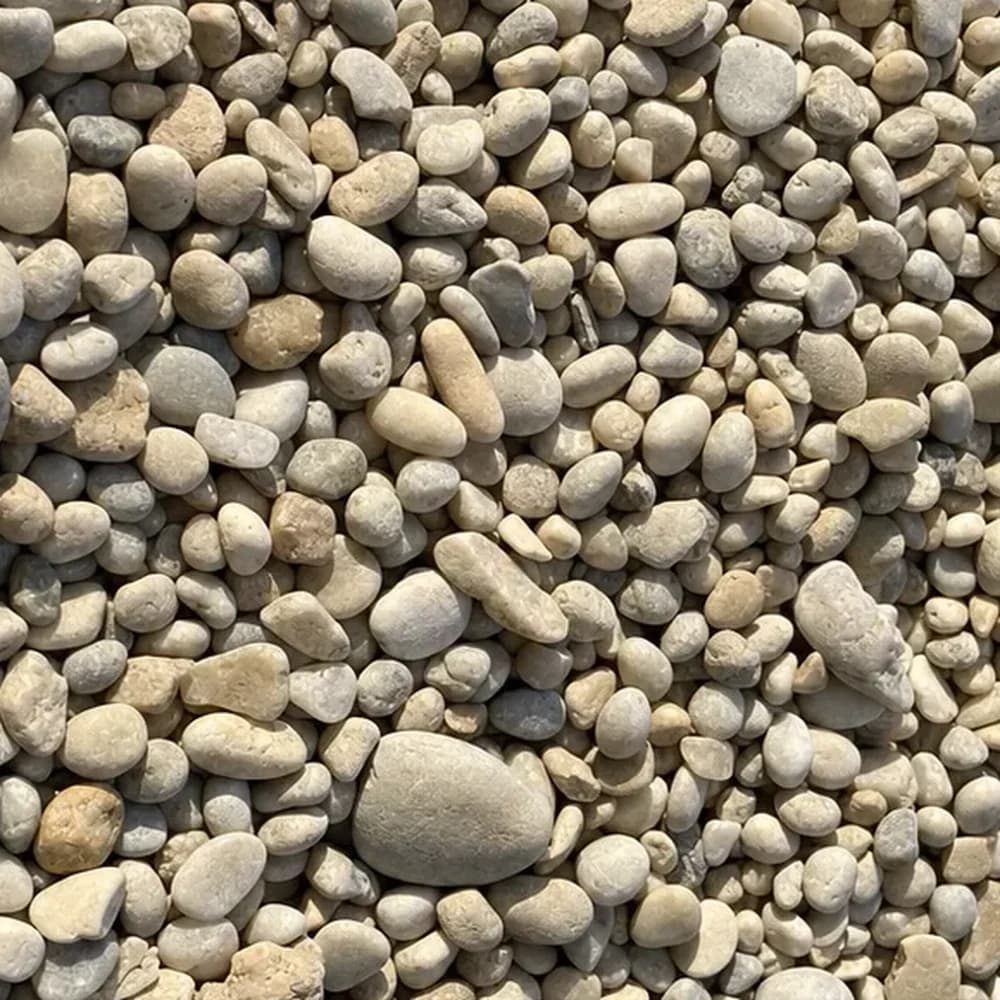
Pea Stone
Pea Stone keeps its naturally varied color and smooth, rounded feel over time, making a comfortable Michigan finish for garden walks and outdoor sitting areas. Size: Approximately 3/8 inch. Type: Small, smooth, naturally rounded stones. Color: Tans, creams, grays, browns and occasional reds.
Free Delivery
Pick up a stone from whatever is already on your drive and put a tape across it. That measurement, and whether the pile has dust and fines in it or has been washed clean, tells you more about which of these bulk landscape materials you need than any product name will. The catalogue below runs in one direction, from the heaviest armor stone down to the finest sand, so you can see what sits either side of the size you were thinking of.
Four inches and up: stone that has to beat ice and high water
RipRap runs from 4 inches to 12 inches and larger, and it exists for one job in this state: holding a bank, a culvert outlet or a lakefront slope against waves, ice and spring runoff. It goes down in thick layers over a filter fabric from a landscape supplier, not as a thin decorative skin. Large River Rock at 2 to 4 inches is the smooth, water-worn version, which suits a dry creek bed or a heavy border where the look carries as much weight as the hold. River Rock at 1 to 3 inches is the smaller rounded size for borders, bed cover and the visible top of a drainage detail.
One to two and a half inches: pads, entrances and trench bottoms
Railroad Ballast is graded to interlock under load while draining freely underneath, which makes it a working surface for an equipment pad or a haul route rather than something you walk on. #4 Crushed Stone at roughly 3/4 to 1-1/2 inches does the same job lower down: heavy drainage, construction entrances and the bottom of a wet trench. Neither is a finish surface, and neither wants to be the top of a driveway.
The two dense-graded classes that go under a Michigan drive
This is where most orders get mixed up. 21AA Limestone is a 1 inch minus graded mix of crushed stone, gravel and binding fines, and it is the standard base under drives, parking pads and pole barn floors. 22A Road Gravel is 3/4 inch minus, a dense-graded mix with a smaller top size, used as road gravel on unpaved drives and private roads and as a base layer.
They are separate MDOT Section 902 classes, not two names for the same pile. Using a class designation is simply how material is specified here; it is not a certification this storefront holds. Note also that 21AA is sold both as crushed limestone and as recycled crushed concrete around the state; the listing states the type for this product. Driveway Gravel at 3/4 inch is the surfacing course that goes over a compacted base.
Three quarters of an inch to a quarter: washed stone where water has to move
3/4" Crushed Stone and #57 Stone at 3/16 to 1 inch are the open, angular stones for French drains, foundation drains and drive surfacing. Drain Rock at 3/4 to 1-1/2 inches is washed to strip out fines and dust, which is exactly what you want in a trench on slow southeast clay. #67 Stone at 1/4 to 3/4 inch does the same work at a smaller size, and suits concrete aggregate too.
Three eighths of an inch and down: the layers you walk on
Pea Stone is the rounded 3/8 inch material for paths, play areas and dog runs. 3/8" Crushed Stone and Walkway Gravel are the angular equivalents, which lock together better underfoot. #8 and #89 Crushed Stone fill paver joints and tight bedding. Stone Screenings is 1/4 inch minus with the dust left in, and it is the bedding layer under pavers and flagstone.
Sand, soil and mulch, which are ordered by the yard
Mason Sand is ultra fine and washed, for masonry joints and play boxes. Washed Sand is coarser, for bedding and backfill. On the soil side, Fill Dirt raises a grade, Top Soil is screened for new lawns over sandy or clay ground, Garden Soil is compost-blended for beds, and Shredded Mulch goes over the top at a shallow layer. Stone is quoted in tons and these are quoted in yards, which is worth remembering before you run the material calculators. What the truck needs on site is worth reading before a date is set.
Common questions
I need stone for a French drain and stone for a drive base. Can one product do both?
No, and the reason is the fines. Drain work wants a washed, open grading such as #57 or drain rock, where the small material has been taken out and water can travel through the voids. A base wants those fines present so they wedge between the stones and lock the layer solid under traffic, which is what 21AA and 22A are built to do. Put a base mix in a drain and it silts up; put washed stone under a drive and it stays loose.
The listing shows Top Soil, Garden Soil and Fill Dirt. Which one do I want for a bare patch of lawn?
Screened topsoil. It is a balanced sand, silt and clay mix meant to be planted into, and on sandy west-side ground it is what builds a layer that holds moisture at all. Garden soil is blended with compost and belongs in beds and raised planters. Fill dirt is screened with minimal organic matter so it compacts and holds a grade, which makes it the right choice under something and the wrong choice under grass seed.
We are a contractor buying for a client site. Does anything change in the catalogue?
No. The same products, sizes and gradings are sold to homeowners, landscapers and contractors, and the jobs run from a cottage turnaround to commercial construction. The delivery address and ZIP code are entered at checkout, so a load can go to a client site rather than to you, as long as someone there knows the drop spot and has kept the route clear.
Do I order the depth I want to finish with, or more than that?
More, for anything that gets compacted. A dense-graded mix settles as the fines work into the gaps, so the loose layer you spread is thicker than the layer you end up with. The calculators here have a tick box, ticked by default, that adds five percent for compaction and spillage (ten percent on the dirt, crusher run, road base and paver base calculators), which is a sensible default on a pad and close to essential on a long lane that will settle unevenly. Loose decorative stone and mulch do not shrink the same way.