Pea Stone in Michigan: Rounded 3/8 Inch Gravel for Comfort and Drainage
Also sold as 3/8" Natural Pea Gravel
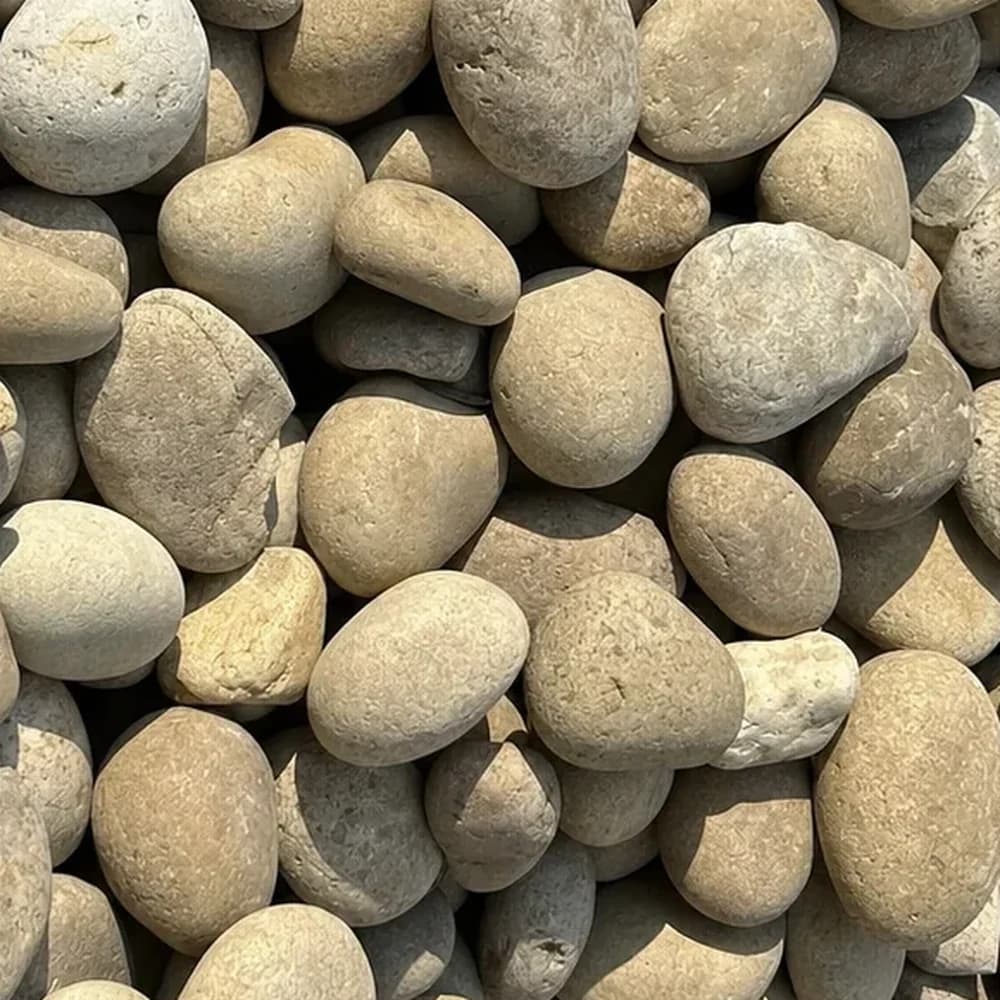
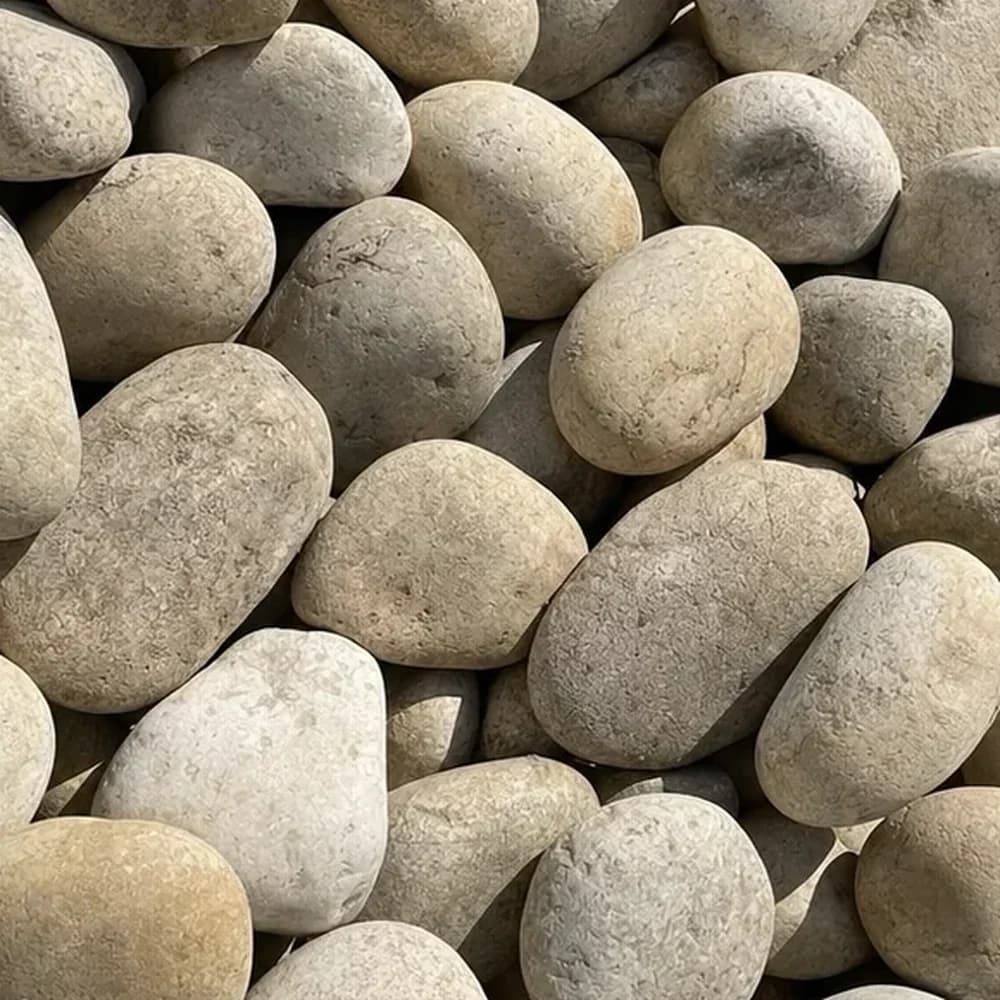
Pea Stone keeps its naturally varied color and smooth, rounded feel over time, making a comfortable Michigan finish for garden walks and outdoor sitting areas.
- Size: Approximately 3/8 inch
- Type: Small, smooth, naturally rounded stones
- Color: Tans, creams, grays, browns and occasional reds
From $660 for 1 ton, delivery included (larger loads cost significantly less per ton)
Free delivery included
Free delivery anywhere in Michigan
Pick a delivery date
Weekday delivery, earliest Oct 30
“Got Pea Stone from these guys and it showed up right when they said it would. Free delivery was a nice bonus, and the whole thing was easy.”
Kevin L. · Verified Buyer
Get a Free Quote
Fill out the form and our sales team will get back to you within the hour.
Size and Grading
- Size
- Approximately 3/8 inch
- Type
- Small, smooth, naturally rounded stones
- Color
- Tans, creams, grays, browns and occasional reds
Put a hand into a pile of pea stone and it pours rather than grips. The pieces are about three eighths of an inch, smooth and naturally rounded rather than crushed, in tans and creams and grays with browns and the occasional red running through them, so a load looks like a riverbed rather than a quarry product. That rounded shape is the whole character of the material. It is why the stone is comfortable to walk on barefoot, why water falls straight through it, and why it will not stay on a slope or inside an edge that is not properly built.
Booking it after the thaw, and why late October up north is a gamble
This is a spring-to-autumn material. Not because the stone minds the cold, but because everything that has to happen underneath it does. The base beneath a pea stone surface needs compacting, and frozen ground will not compact. Edging has to be pinned into ground that a pin will go into. Fabric wants to be laid flat rather than fought with in the wind and frost.
So the window runs from the spring thaw into late fall, and it is a shorter window in the Upper Peninsula and the northern Lower Peninsula than it is in the south. A cottage project started in late October north of Cadillac is betting against the first hard freeze, and that bet is lost roughly as often as it is won. Plan the layout over the winter, order after the ground has dried out from the melt, and build in the settled part of the season.
Getting the ground ready in the weeks before the load lands
The prep is the job. The stone is the easy part.
Strip the sod and any soft organic material along the route or across the area, because turf left underneath keeps breaking down and the surface settles unevenly over it. Shape the ground so water leaves sideways rather than running the length of the path. Put in a compacted base: on the sandy outwash of the west side and up north the subsoil drains fine and the base is mostly about giving the stone something firm to sit on, while on the flat lake plain clay of the southeast it has to do considerably more, because the ground underneath softens every spring as the frost comes out.
Then the edge, and this is where most pea stone projects are won or lost. Rounded stone exerts a steady sideways push, and it will find any gap in a restraint. Steel, timber or set stone, pinned rather than propped, installed before the gravel goes in rather than after.
Fabric goes between the base and the stone. It keeps the gravel and the soil from marrying into one another and slows weeds coming up through.
Splash pads and low-wall backfill: two jobs pea stone earns
The drainage uses are the underrated ones. A splash pad below a downspout outfall, where the water has killed the grass and started cutting a channel, is a genuinely good fit: the stone takes the impact, water goes straight through it, and the area stops being a mud patch by the back door.
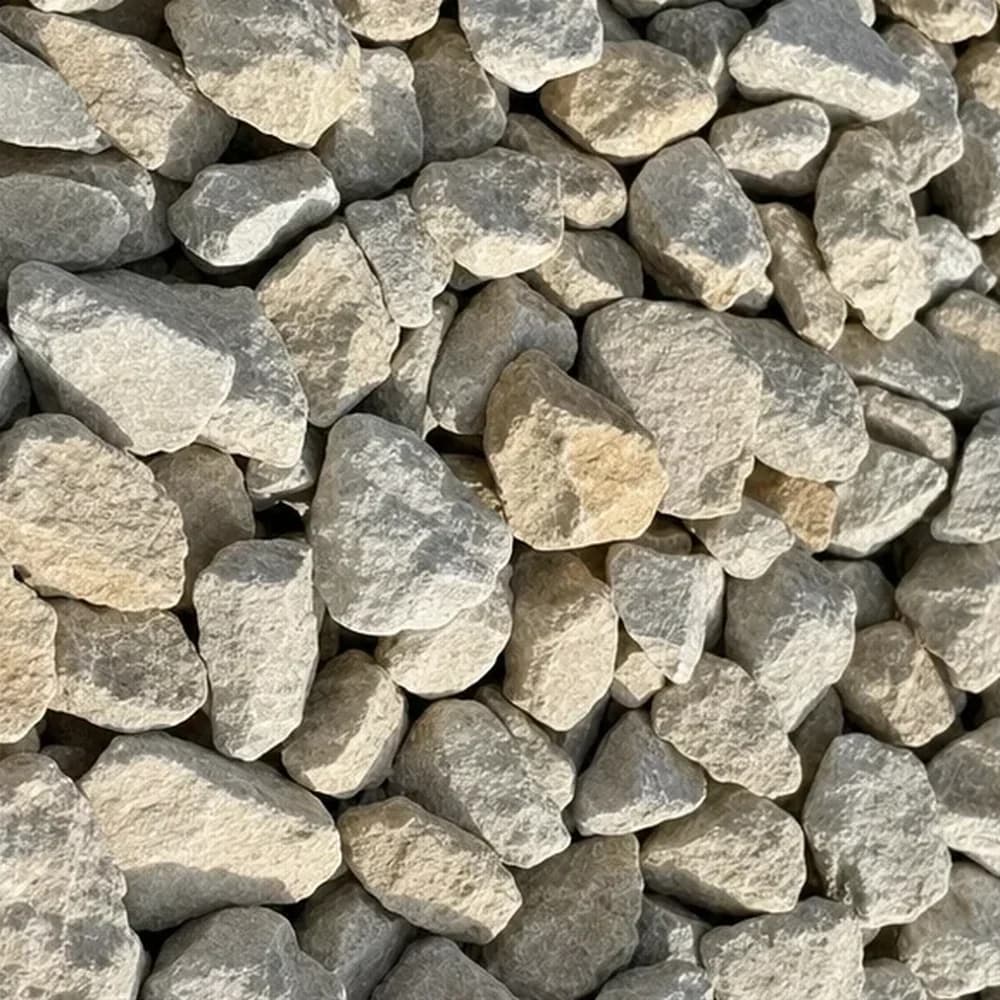
Behind a low garden wall, the drainage zone at the back of the wall is there to stop water building pressure against the structure through a wet March. Rounded stone drains well and is easy to pour into a narrow gap, though it is worth knowing that a washed angular stone such as #67 Stone is the more usual specification there, because angular pieces stay put better under the backfill above them. On a low landscape wall pea stone is a reasonable choice; on anything structural or retaining real height, follow whatever the wall's designer specifies.
The other uses are the ones people come for: informal patio and seating areas, garden paths through planting, play areas where rounded stone is kinder to land on than anything crushed, and ground cover in swales or beds where turf has given up.
Where a shed pad goes wrong with rounded stone
A shed or garage pad is the most common mistake on this page, and the reason is the same rounded shape that makes the stone pleasant underfoot. Rounded pieces cannot interlock. Under a point load, such as the corner of a shed or a tire, they roll aside instead of locking together, and the pad settles unevenly no matter how well the stone was leveled on the day.
A pad wants a dense-graded material that compacts: 21AA limestone is the Michigan answer for that, or 22A road gravel where a hard-packing mix suits the site better. If you want the look of pea stone around a shed, put it in a border beside the pad rather than under the building.
The same logic rules it out of a driveway. Cars turning on rounded gravel push it into windrows, and the drive ends up in the lawn.
Yards and tons for four splash pads and 26 feet of wall backfill
Hypothetical layouts. Take the splash areas first: four of them, each four feet by six, three inches deep.
- 4 x 6 = 24 square feet each, so 24 x 4 = 96 square feet
- 3 inches is 0.25 feet, so 96 x 0.25 = 24 cubic feet
- 24 / 27 = 0.9 cubic yards
This site publishes about 2,800 lb per cubic yard for 3/8 inch pea gravel, which is 1.40 tons per yard. So 0.9 x 1.40 = 1.3 tons.
Now the drainage zone behind a low wall, twenty-six feet long, a foot wide, carried up two and a half feet.
- 26 x 1 = 26 square feet in plan
- 26 x 2.5 = 65 cubic feet
- 65 / 27 = 2.4 cubic yards, and 2.4 x 1.40 = 3.4 tons
Round up on the splash pads rather than the wall, because a shallow area spread by hand always takes a little more than the sum says. The pea gravel calculator does the same conversion, handles circular areas, takes up to five areas at once, works in depths from a quarter inch to twenty-four, and offers a five percent addition for raking loss.
What a winter of shoveling does to it
Expect to lose some. A snow shovel lifts rounded stone off a path far more readily than it lifts crushed gravel, and by March there is usually a fringe of pea stone in the lawn along both sides of any route that was cleared. A plastic shovel and a slightly higher blade angle help; so does leaving an inch of snow rather than scraping to the stone.
The annual hour is the same each spring: rake the stray stone back off the grass, pull the surface level where foot traffic has worn a channel down the middle, check the edge restraint for anything frost has lifted, and top up the thin patches. Weeds that do appear sit in the debris that collects on top rather than rooting in the stone, so a blow or a rake through in spring removes most of the problem. Where a bed needs something heavier that does not travel under a shovel, River Rock at one to three inches stays where it is put.
When the figure settles, choose a date and a quantity here, and pick a drop spot on something hard. Delivery is arranged at checkout from your ZIP code, and rounded stone tipped onto a lawn takes weeks to pick back out of it.
Quickly Calculate How Much You Need
Material: Pea Stone
How to Measure
Measure the length and width of your project area in feet
Decide on depth in inches (2" for landscaping, 4" for driveways)
Enter the values above and we'll calculate the tonnage you need
Need help figuring out the right amount? We can help!
Call or text us at (313) 930-8646 and we'll help you calculate the right quantity for your project.
Not sure how much you need? The Pea Gravel Calculator has depth guides, coverage charts and worked examples for this material.
Frequently Asked Questions About Pea Stone
Customer Reviews
Grabbed Pea Stone from these guys and ordering was painless, delivery showed up when expected and the material looked good.
Stephanie N. · Warren, MI · Verified Buyer
Got Pea Stone from these guys and it showed up right when they said it would. Free delivery was a nice bonus, and the whole thing was easy.
Kevin L. · Detroit, MI · Verified Buyer
Ordered Pea Stone from Michigan Rock Supply and they kept me updated the whole time. Delivery came exactly when expected and I'm really happy with how it all turned out.
Amanda T. · Warren, MI · Verified Buyer
Ordered Pea Stone from them for a walkway project, and the free delivery made it super easy. Everything showed up when expected and looked great, really happy with it.
Wendy G. · Flint, MI · Verified Buyer
Needed Pea Stone for a walkway project and these guys made it super easy. The free delivery was a huge bonus and it showed up right when they said it would. Really happy with how it turned out and I'd definitely order from them again.
Greg L. · Flint, MI · Verified Buyer
Pea Stone has 5 verified customer reviews with an average rating of 4.8 out of 5.