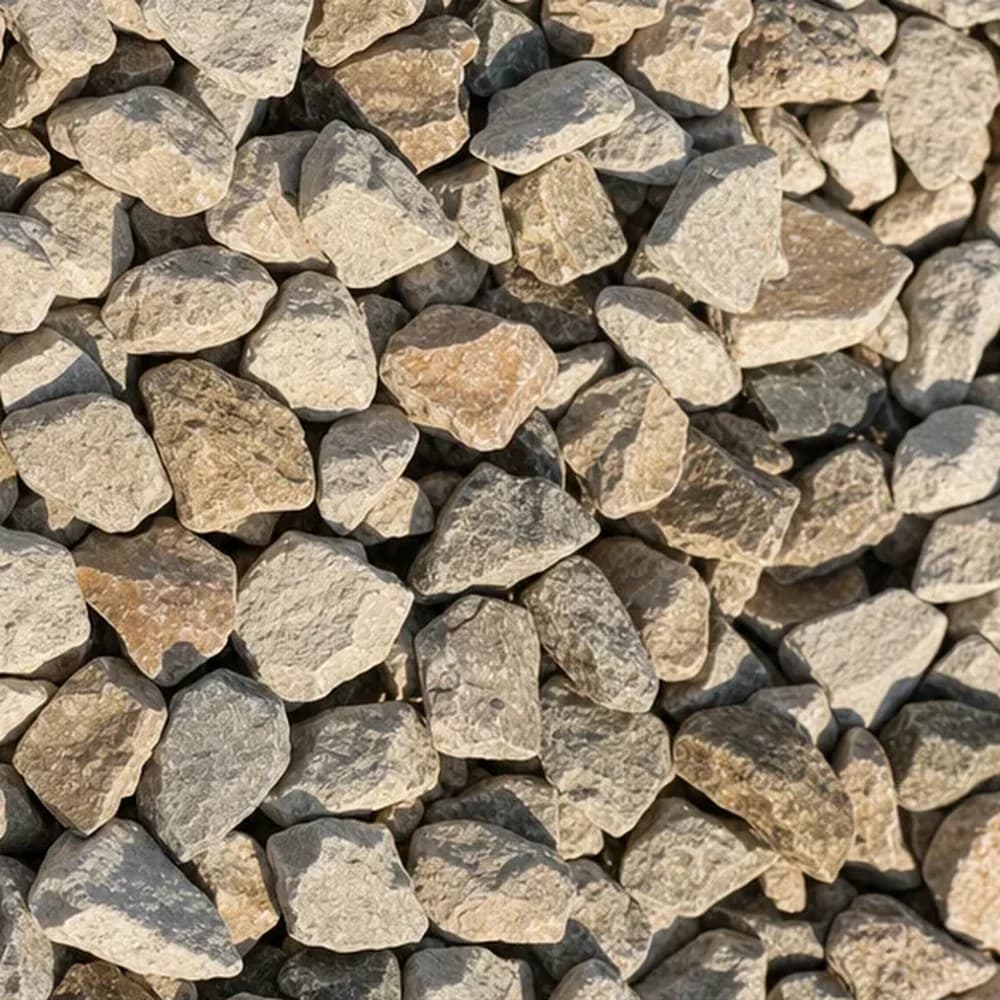
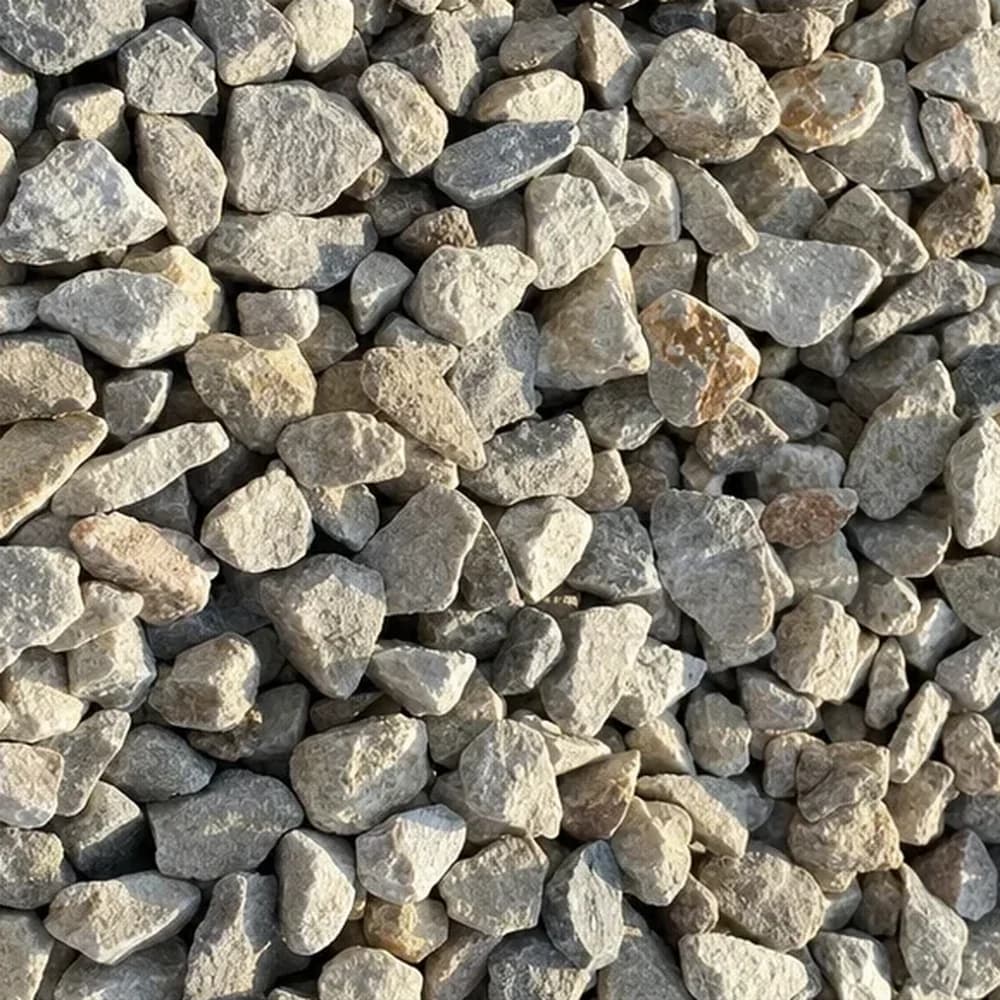
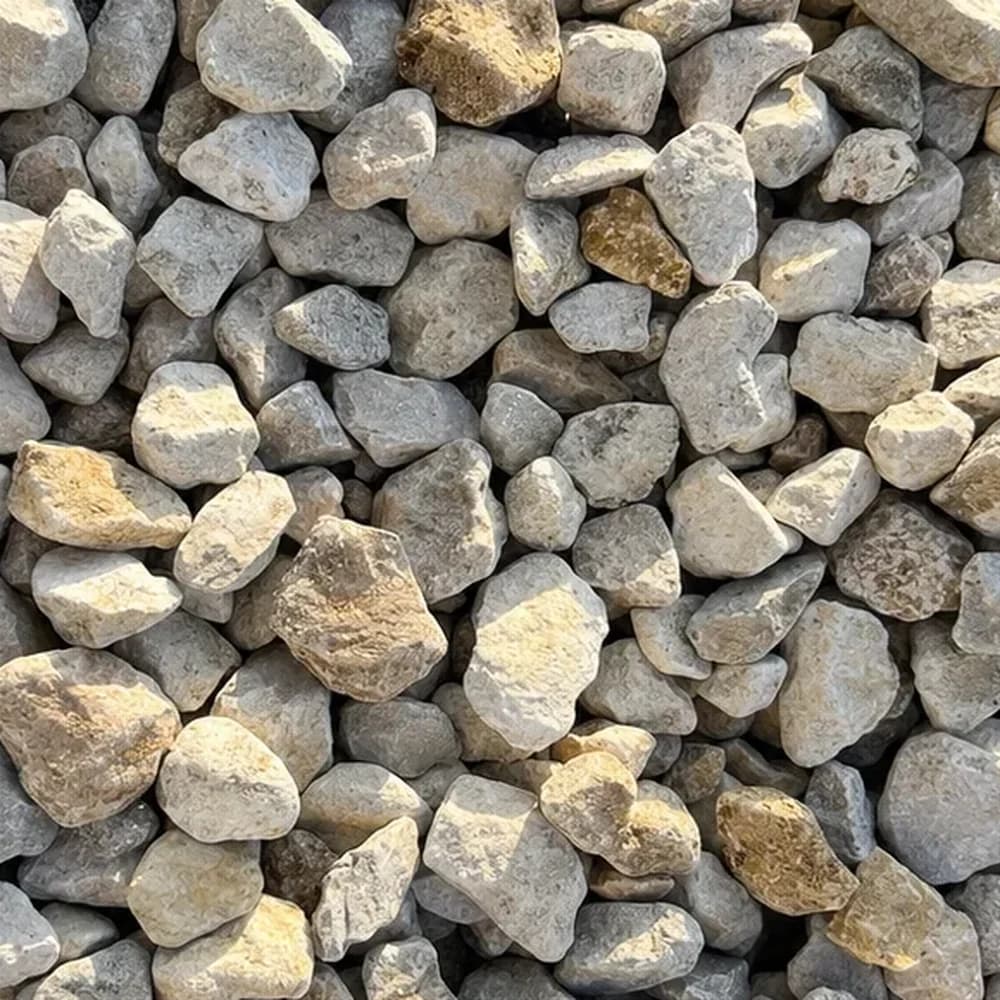
#4 Crushed Stone in Michigan: The 3/4 to 1-1/2 Inch Layer That Goes Underneath
Do not use #4 Crushed Stone as the top finish when Michigan driveway work needs a tighter surface; keep it low for drainage.
- Size: About 3/4 inch to 1-1/2 inches
- Grading: #4
- Type: Angular crushed stone
From $428 for 1 ton, delivery included (larger loads cost significantly less per ton)
Free delivery included
Free delivery anywhere in Michigan
Pick a delivery date
Weekday delivery, earliest Oct 30
“Ordered crushed stone from Michigan Rock Supply and the price was fair for what I got. Delivery got here on time, and I'm really happy with the whole thing.”
Sandra N. · Verified Buyer
Get a Free Quote
Fill out the form and our sales team will get back to you within the hour.
Size and Grading
- Size
- About 3/4 inch to 1-1/2 inches
- Grading
- #4
- Type
- Angular crushed stone
Three products on this site get mixed up with each other in a pile, and #4 crushed stone is the one people reach for when they wanted one of the other two. It is coarser than #57 Stone, which is the washed drainage size most trench details are written around, and it overlaps with Railroad Ballast without doing quite the same job. Graded #4, running roughly 3/4 inch to 1-1/2 inches, angular and full of large voids, it is a layer that buries itself under something else. Order it as a surface and you will hate it by the second week.
Order #4 crushed stone when the ground gives way as the frost comes out
The case for it is ground that will not hold. On the flat southeastern lake plain, around Saginaw Bay and across the Thumb, spring meltwater sits in clay that drains through ditches and tile rather than downward, and anything built on that ground gets soft in April. A thick lift of coarse open stone below the finished layer keeps water moving sideways out from under the build instead of letting it pool around the base through the thaw.
The other case is water arriving fast. A ditch beside a drive that scours out every heavy melt, a bank washing into the alley, a slope shedding runoff onto a lane: the stone is heavy and angular enough to stay where it is put while a lot of water goes past it.
So: choose it where the job is drainage, load spreading or holding ground, and where something else will sit on top of it.
Skip it wherever bare feet, bike tires or a rake are involved
A playground surface is the clearest wrong answer. Angular stone at 3/4 to 1-1/2 inches is sharp, it rolls under a foot, and it is unpleasant to land on. Play areas want rounded material, which on this site is Pea Stone, over a prepared base.
Skip it for a garden path for the same reason, and skip it as the top of a driveway, where the voids will never close into a driving surface and the individual stones will migrate into the lawn. Skip it in a standard house French drain too: the cut is usually narrow and a smaller washed stone beds far better around a four inch line.
And skip it anywhere you were hoping to finish with a rake. This is a material you place with a bucket and level roughly; raking it flat by hand is an argument you will lose.
Gabion baskets, a scoured ditch and the soft stretch of a two-track
Gabion fill is the use it suits best of all, because the stone only has to be the right size to sit in the basket without falling through the mesh, and its weight and angularity do the rest. A run of baskets holding a bank behind a garage or along a stream edge is exactly the job.
Erosion work is the second. Lining a ditch, filling a washout beside a drive or building up the low corner of a lot where runoff keeps cutting a channel: the stones lock together and take repeated flow. Where the water is a lakefront or a live stream bank rather than a ditch, the stone needs to be heavier still, and that is RipRap.
The third is the soft stretch. Every rural property has one, usually the piece of the two-track that turns to soup as the frost leaves. Digging out the mush and putting a coarse lift in the bottom of the excavation gives the lane something that does not mind being wet, and everything above it stays where it was put.
A bottom lift under an RV pad, never the course you park on
This is the whole discipline of the material. Under a pole barn floor, an RV or boat pad, or a re-built lane, #4 goes in as the lower lift, over a graded and cleaned-out subgrade. It spreads the load, keeps a drainage path open beneath the build and stops the base above it from being drawn down into soft ground.
What sits on top is a dense-graded material that compacts: 21AA limestone for a pad or a drive, or 22A road gravel where a lane wants a hard-packing running course. The coarse stone never shows. With frost reaching 42 inches under the Michigan Residential Code and the building official able to require deeper footings in colder parts of the state, anything carrying a structure is designed by a builder rather than sized from a product page.
Tons for a 14 by 35 RV pad and 220 feet of soft lane
Both of these are hypothetical. Take the RV pad first: fourteen feet wide, thirty-five feet long, with a six inch lower lift under the compacted base.
- 14 x 35 = 490 square feet
- 6 inches is 0.5 feet, so 490 x 0.5 = 245 cubic feet
- 245 / 27 = 9.1 cubic yards
This site publishes about 2,900 lb per cubic yard for #4 stone and ballast, or 1.45 tons per yard, so 9.1 x 1.45 = 13.2 tons.
Now the soft stretch of a lane, eleven feet wide and two hundred and twenty feet long, with five inches of stone in the bottom of the dig.
- 11 x 220 = 2,420 square feet
- 5 inches is 0.417 feet, so 2,420 x 0.417 = 1,009 cubic feet
- 1,009 / 27 = 37.4 cubic yards, and 37.4 x 1.45 = 54.2 tons
On the lane, round up harder than you think you need to. Stone placed into soft ground partly vanishes into it, which is the point of the layer, and the yardage that reaches the finished thickness is always less than the arithmetic suggests. The stone calculator takes up to five areas in one pass, handles circles, and offers a five percent addition that covers spreading but not the amount a genuinely soft subgrade will swallow.
Once the figure holds up, set the tonnage and the drop date here. Delivery is arranged at checkout from your ZIP code, and it is worth walking the access with a tape first, because a long soft lane in April is exactly the ground a loaded truck will struggle to get down.
Quickly Calculate How Much You Need
Material: #4 Crushed Stone
How to Measure
Measure the length and width of your project area in feet
Decide on depth in inches (2" for landscaping, 4" for driveways)
Enter the values above and we'll calculate the tonnage you need
Need help figuring out the right amount? We can help!
Call or text us at (313) 930-8646 and we'll help you calculate the right quantity for your project.
Not sure how much you need? The Stone Calculator has depth guides, coverage charts and worked examples for this material.
Frequently Asked Questions About #4 Crushed Stone
Customer Reviews
Had crushed stone delivered by them and everything showed up right where I needed it. Really happy with the whole thing and I'd definitely order again, recommend them too.
Dana C. · Lansing, MI · Verified Buyer
Ordered crushed stone from Michigan Rock Supply and it was a super easy experience. Pricing was fair, delivery went smooth, and I'd definitely use them again.
Amanda B. · Flint, MI · Verified Buyer
Ordered crushed stone from Michigan Rock Supply and the price was fair for what I got. Delivery got here on time, and I'm really happy with the whole thing.
Sandra N. · Grand Rapids, MI · Verified Buyer
Ordered crushed stone from these guys and I'm really happy with it, fair pricing and the delivery went smooth.
Jennifer D. · Detroit, MI · Verified Buyer
Went with the team for crushed stone and everything showed up when they said it would. I'd definitely order again and recommend them.
Kelly T. · Sterling Heights, MI · Verified Buyer
#4 Crushed Stone has 5 verified customer reviews with an average rating of 5 out of 5.
#4 Crushed Stone delivery across Michigan
- Detroit
- Grand Rapids
- Warren
- Sterling Heights
- Ann Arbor
- Lansing
- Dearborn
- Clinton Township
- Canton
- Macomb
- Livonia
- Troy