#89 Crushed Stone in Michigan: The Fine Angular Stone That Tightens Up
Do not use #89 Crushed Stone where open drainage is needed; in Michigan, it is better suited to compactable paver and flagstone work.
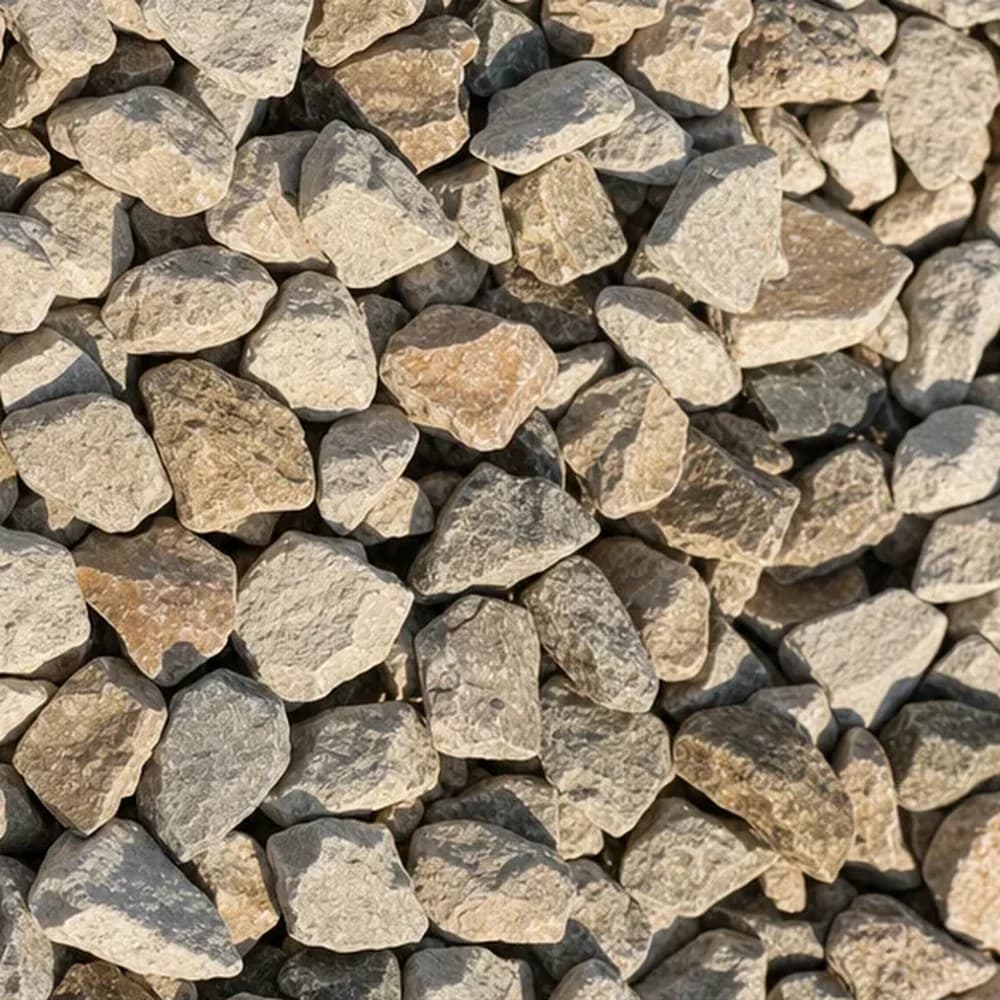
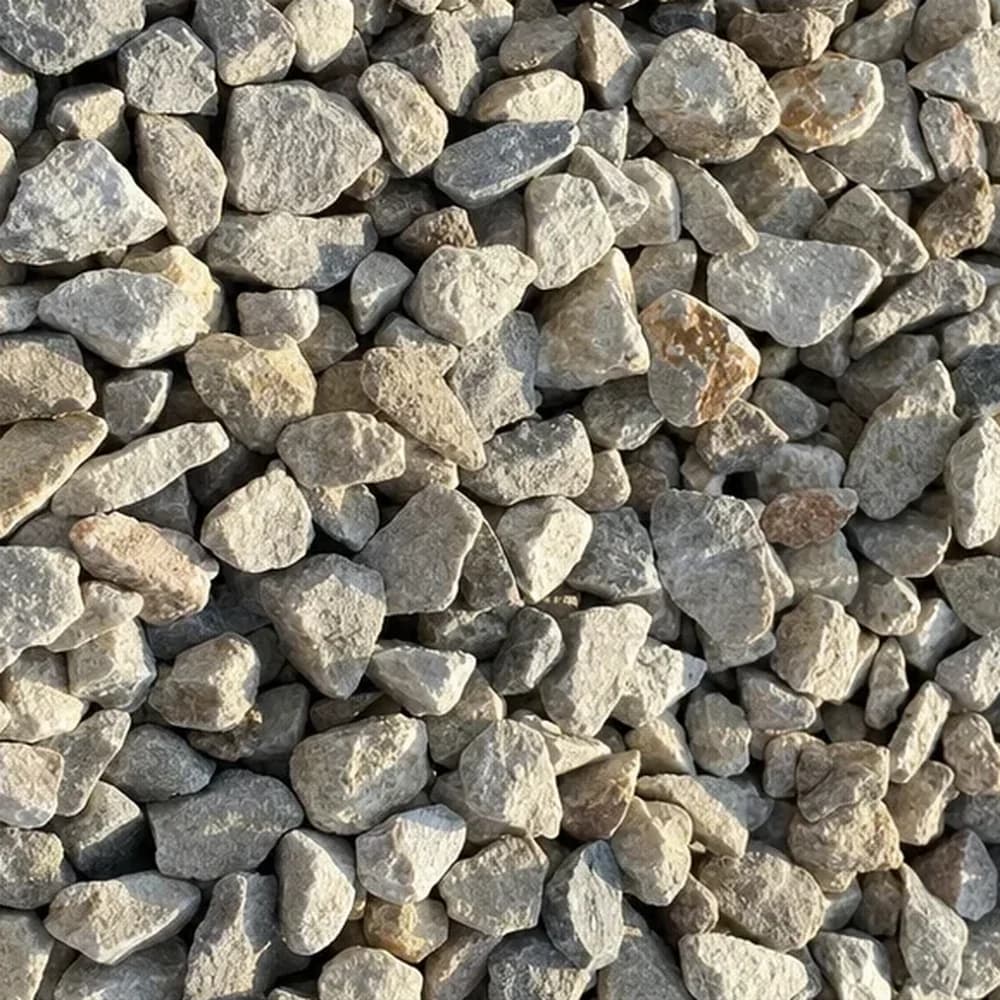
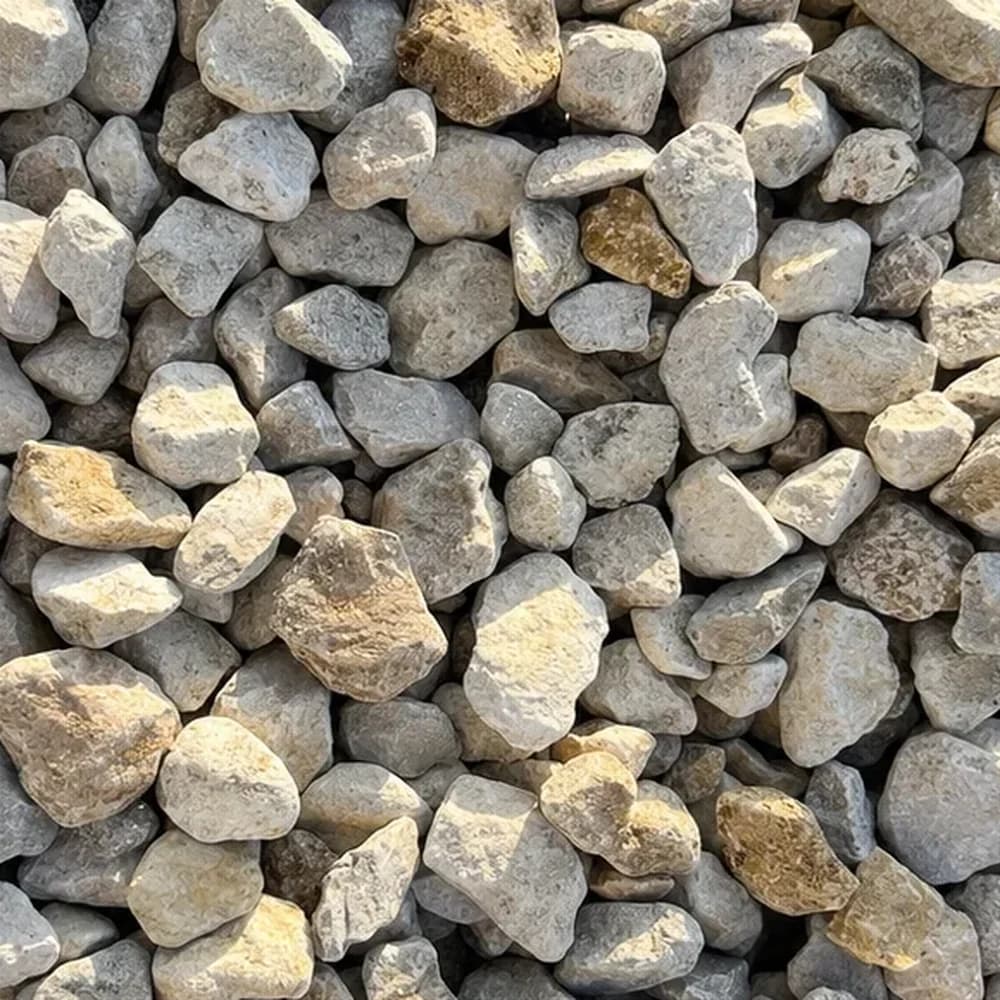
- Size: About 3/8 inch down to fines
- Grading: #89, carries some fines
- Type: Angular crushed stone
From $428 for 1 ton, delivery included (larger loads cost significantly less per ton)
Free delivery included
Free delivery anywhere in Michigan
Pick a delivery date
Weekday delivery, earliest Oct 30
“Decided on crushed stone from these guys, price was fair and the delivery went great.”
Steve S. · Verified Buyer
Get a Free Quote
Fill out the form and our sales team will get back to you within the hour.
Size and Grading
- Size
- About 3/8 inch down to fines
- Grading
- #89, carries some fines
- Type
- Angular crushed stone
The order that most often goes wrong on this listing is a drainage order. Someone has clay in the southeast or a wet hollow on an otherwise sandy west-side lot, they want a French drain, they see a small stone with a number on it and they buy #89 crushed stone by the ton. It arrives at about 3/8 inch down to fines, and those fines are the problem: pack the trench with it and the gaps close, the water stops moving and the job has to come back out. This stone is worth ordering for the opposite reason. It goes tight, stays tight and holds a finished hardscape detail in place.
The joint and bedding season runs from the thaw to the last dry week of fall
Compaction needs unfrozen ground, so the window for this material opens after the frost comes out and closes when it goes back in, which is earlier in the Upper Peninsula and the northern Lower Peninsula than it is down south. Frost reaches 42 inches under the Michigan Residential Code, and the ground has to be right through the whole depth you are working in, not just on top.
There is a second constraint that catches people out. Fine crushed stone sweeps into a joint properly only when it is dry. A damp load clumps, bridges across the joint and leaves you tamping air pockets, so the good days for jointing are dry ones in late spring through early autumn, not the week after a thaw when everything on site is still sodden.
Getting the surface ready in the days before the load lands
Bedding and jointing are the last stages of a build, which means everything underneath has to be finished first. The compacted base needs to be in and screeded flat, the edge restraint set, and the pavers or flagstone laid to the line you want before a shovel of this goes anywhere.
Have somewhere dry to keep it. A tarp over the pile, or a spot under cover, keeps it sweepable across the two or three days a patio usually takes. Have a stiff broom and a plate compactor to hand as well, because the joint filling and the compaction happen in the same session, working the stone in, running the plate, then topping up the joints that have dropped.
Where the fines are the asset: joints, bedding and chip seal
In a paver or flagstone joint, the angular pieces and the fine material lock against each other and resist being washed or blown out, which keeps the surface acting as one piece rather than a field of separate stones. Under flagstone, the same behavior lets you bed a slab, tap it to level and have it stay where you tapped it.
It also has a life away from the patio. Chip seal work uses small angular aggregate of this sort for the same reason, and concrete mixes that want a compactable fine aggregate take it as well. On a walkway, a thin bedding course of it under the paving gives a tighter, more forgiving setting layer than an open stone would, so long as the water has a route out somewhere else in the design.
Three jobs people bring to this stone that want something else
A shed or garage pad base. A pad has to carry weight and hold flat. That is dense-graded 21AA limestone compacted in lifts, or 22A road gravel where a hard-packing road mix is wanted. A fine stone laid thick under a pad is not a base course and will not behave as one.
A downspout splash area. This is a water job, and water is the one thing this material is poor at passing. Put a washed open stone there instead, such as Drain Rock, or use rounded River Rock where the corner of the house is on show.
Retaining wall backfill. The drainage zone behind a wall exists to keep water pressure off the back of it, and filling that zone with a stone that tightens up defeats the point. Use a washed stone with open voids and keep this one for the paving on top of the wall.
Tons for a 16 by 20 paver patio, bedded and jointed
Take a patio sixteen feet by twenty, bedded at one inch over a finished base.
- 16 x 20 = 320 square feet
- 1 inch is 0.0833 feet, so 320 x 0.0833 = 26.7 cubic feet
- 26.7 / 27 = 0.99 cubic yards, call it one cubic yard
This site publishes a weight of about 2,800 lb per cubic yard for its #89, #8 and 3/8 inch chip family, which is roughly 1.40 tons per yard, so that bedding course is about 1.4 tons.
The joints themselves are a much smaller number than people expect. With twelve inch pavers and quarter inch joints, the joint lines account for roughly four percent of the surface, so at two inches deep that is 320 x 0.04 x 0.167 = 2.1 cubic feet, under a tenth of a cubic yard. In practice you order the bedding and the joints together and the joint share disappears into the rounding.
A flagstone landing eight feet by ten, bedded at an inch and a half, works out at 80 x 0.125 = 10 cubic feet, or 0.37 cubic yards, about half a ton. Both are hypothetical layouts. The stone calculator converts yards to tons for you, takes up to five areas at once and adds an extra five percent by default, which is worth keeping on a job with a lot of cut edges.
The first winter of a jointed patio, and the spring top-up
Expect some movement in the first season. Joints settle as the fines work down into the gaps, rain carries a little material out of the highest joints, and freeze and thaw lifts the surface slightly and lets it back down. None of that is a fault in the stone; it is what a flexible, dry-laid surface does in this climate.
The maintenance is small and it happens once. In the spring after the thaw, sweep a little more material into the joints that have dropped, run the plate over the surface again if the patio is large, and clear leaf litter out of the joint lines before it mats down and holds water. Do that in the first year or two and the surface should need very little after that.
Quickly Calculate How Much You Need
Material: #89 Crushed Stone
How to Measure
Measure the length and width of your project area in feet
Decide on depth in inches (2" for landscaping, 4" for driveways)
Enter the values above and we'll calculate the tonnage you need
Need help figuring out the right amount? We can help!
Call or text us at (313) 930-8646 and we'll help you calculate the right quantity for your project.
Not sure how much you need? The Stone Calculator has depth guides, coverage charts and worked examples for this material.
Frequently Asked Questions About #89 Crushed Stone
Customer Reviews
Went with the team for crushed stone, and the price felt fair for what I got. The driver was friendly and really careful about where he placed it, which made the whole thing easy.
Jeff F. · Warren, MI · Verified Buyer
Decided on crushed stone from these guys, price was fair and the delivery went great.
Steve S. · Lansing, MI · Verified Buyer
Ordered crushed stone from Michigan Rock Supply, delivery got here on time and I'd definitely order again.
Mark T. · Grand Rapids, MI · Verified Buyer
Needed crushed stone for a driveway project and this company made it super easy, with free delivery and good communication the whole time. They kept me updated on when it would show up, and everything was right on time.
Lisa J. · Flint, MI · Verified Buyer
#89 Crushed Stone has 4 verified customer reviews with an average rating of 5 out of 5.
#89 Crushed Stone delivery across Michigan
- Detroit
- Grand Rapids
- Warren
- Sterling Heights
- Ann Arbor
- Lansing
- Dearborn
- Clinton Township
- Canton
- Macomb
- Livonia
- Troy