River Rock in Michigan: Rounded 1 to 3 Inch Stone for Beds and Water Routes
A common mistake in Michigan is hiding River Rock where its smooth, rounded form cannot finish a visible drainage or landscape area.
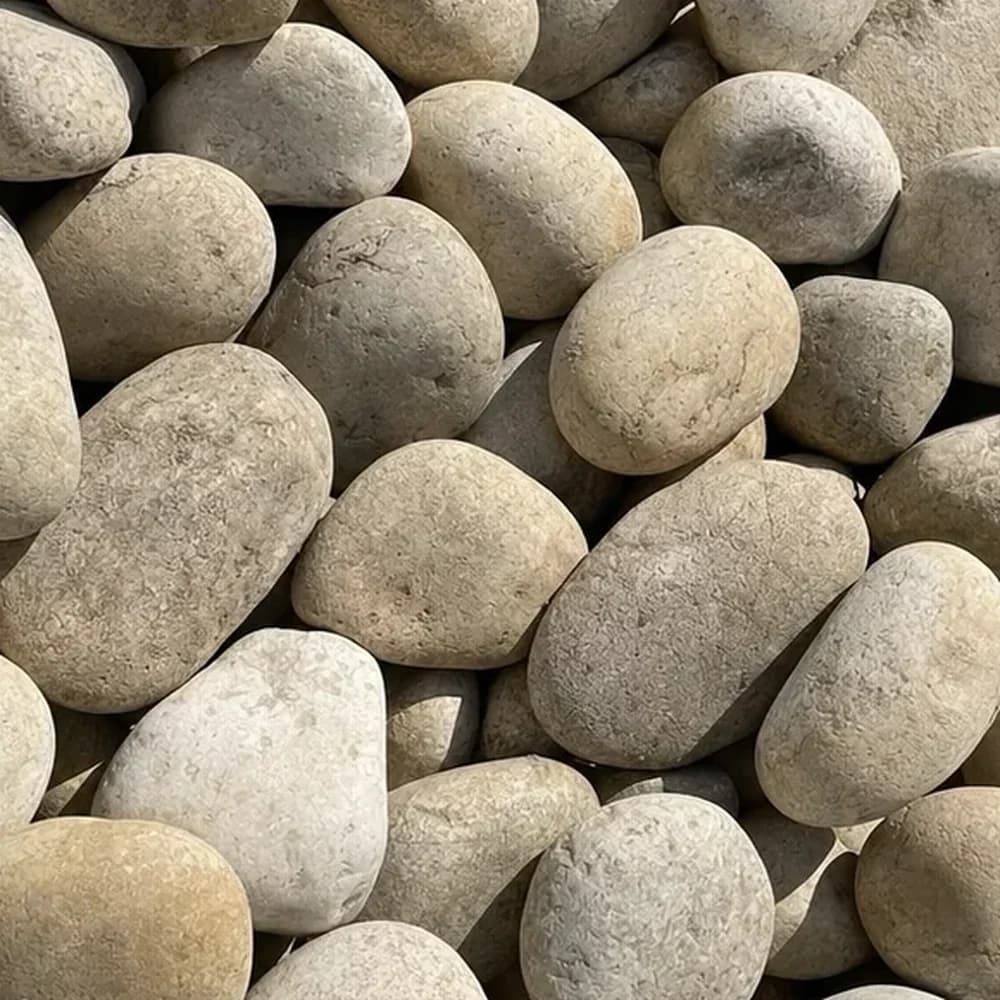
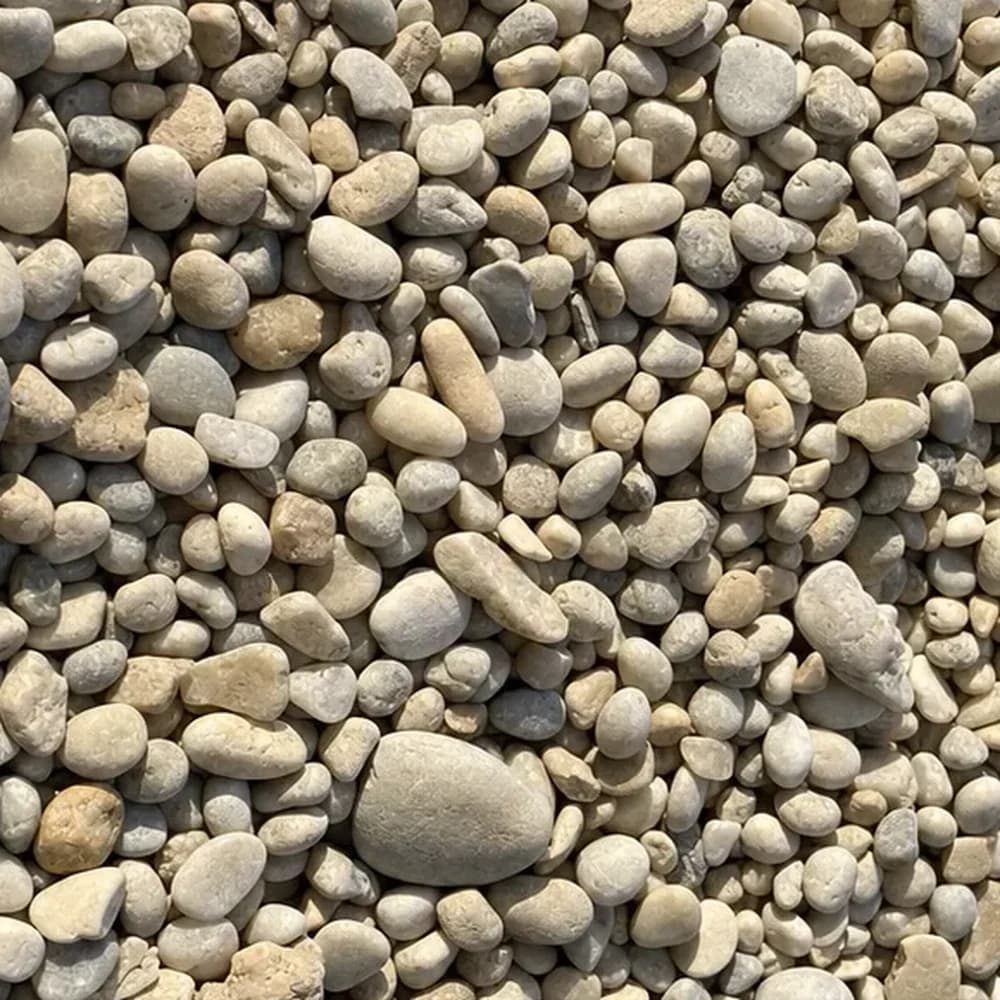
- Size: 1 inch to 3 inches
- Type: Smooth, naturally rounded stones
- Color: Tans, grays, browns and occasional reds
From $797 for 1 ton, delivery included (larger loads cost significantly less per ton)
Free delivery included
Free delivery anywhere in Michigan
Pick a delivery date
Weekday delivery, earliest Oct 30
“Decided on River Rock from this company and I'm really happy with how it turned out.”
Karen N. · Verified Buyer
Get a Free Quote
Fill out the form and our sales team will get back to you within the hour.
Size and Grading
- Size
- 1 inch to 3 inches
- Type
- Smooth, naturally rounded stones
- Color
- Tans, grays, browns and occasional reds
Two kinds of ground send people to this page. One is a sandy west-side or northern lot where the soil drains in an hour and a mulched bed dries to dust by August. The other is flat southeastern clay where snowmelt stands in the same low corner until May and mulch simply floats away. Rounded stone, one to three inches, in tans, grays, browns and the occasional red, answers both problems in a way bark never will, provided it goes down for the right reason. The questions below are the ones buyers here ask in roughly this order.
Will it still look right after a Michigan winter of plowing and salt?
Better than most alternatives. The stone does not rot, fade or need replacing each spring the way shredded bark does, and the natural color variation hides grit. The honest caveats are local. A bed along a drive that gets plowed will collect salt crust and plow scatter, and stone thrown into the lawn by a blade is unpleasant to find with a mower, so keep stone beds back from the blade line or use a firm edge. When the color dulls after a couple of seasons, a rinse with a garden hose brings the surface back.
Does rounded stone work in a low spot that stands wet until May?
It works as a surface for water to run over, not as a way to raise the ground. If the low corner is a grading problem, the fix is fill dirt to bring the level up and screened topsoil to finish it, not a load of stone that will sink into soft clay. Where the low spot is genuinely a drainage route, shape a shallow swale so water has a path and line the path with river rock. The gaps between the stones let water through, and the stone stops the channel scouring.
On soft or wet ground, put something between the stone and the soil. A landscape fabric laid in the swale and lapped up the sides keeps the stones from being swallowed and keeps silt from washing up between them. On the wettest clay, a bed of open washed stone such as #57 Stone under the rounded surface course gives the water somewhere to move even when the top layer is frozen.
Is river rock or riprap the right call at a culvert outlet?
Depends entirely on what the pipe delivers. A roof downspout, a field tile outlet or a driveway culvert on a quiet lane discharges gently enough that one to three inch stone will stay put, and it looks far better than armor rock in a yard. A culvert that runs hard after snowmelt, or a ditch that jumps a foot after a spring storm, will pick rounded stone up and carry it downstream. That is RipRap work, and the giveaway is whether you have watched the outlet during a real thaw or are guessing.
The middle case is a splash area under a downspout, which is where a lot of first orders land. A square of stone a few feet across, set on fabric and graded so water runs away from the foundation rather than back toward it, stops the soil pitting and stops mulch washing across the lawn every storm. It is a small quantity and an easy afternoon, and it is the one river rock job that almost always works exactly as pictured.
Can a rock garden bed replace mulch on a sandy lot?
For borders, foundation beds, rock gardens and low-water plantings, yes, and on sandy outwash ground it has a practical advantage: stone slows evaporation from the surface without breaking down into the soil the way bark does. Bear two things in mind. Stone does not feed the soil, so plants that rely on decomposing mulch for organic matter will want feeding some other way. And a stone bed is harder to weed once leaves and grit collect in the gaps, so fabric underneath and a blower in autumn both earn their keep. For larger, bolder groupings, Large River Rock works alongside it in the same palette.
How many yards for a 35 foot swale and a 120 square foot bed?
Take the swale first, six feet wide across the shaped channel and thirty-five feet long, at four inches.
- 6 x 35 = 210 square feet
- 4 inches is 0.333 feet, so 210 x 0.333 = 70 cubic feet
- 70 / 27 = 2.6 cubic yards
Now a foundation bed of 120 square feet at two inches.
- 2 inches is 0.167 feet, so 120 x 0.167 = 20 cubic feet
- 20 / 27 = 0.7 cubic yards
A round feature, say a nine foot circle, uses the same method: the area is about 64 square feet, so at three inches that is 64 x 0.25 = 16 cubic feet, or 0.6 cubic yards. All three are illustrations rather than real projects. This site publishes about 2,700 lb per cubic yard for 1 to 3 inch river rock, or 1.35 tons per yard, so on that approximate figure the swale is 2.6 x 1.35 = 3.5 tons, the foundation bed 0.7 x 1.35 = 0.9 tons and the circle 0.6 x 1.35 = 0.8 tons. The river rock calculator runs the same conversion, along with circles, up to five separate areas at once, depth in inches and a five percent allowance, on by default, to cover spread.
When the figure looks right, choose a delivery date and a quantity on this page. Delivery is arranged at checkout from your ZIP code, and the driver needs a clear route to a firm spot where the load can be tipped, which in early spring usually means the drive rather than the back garden.
Quickly Calculate How Much You Need
Material: River Rock
How to Measure
Measure the length and width of your project area in feet
Decide on depth in inches (2" for landscaping, 4" for driveways)
Enter the values above and we'll calculate the tonnage you need
Need help figuring out the right amount? We can help!
Call or text us at (313) 930-8646 and we'll help you calculate the right quantity for your project.
Not sure how much you need? The River Rock Calculator has depth guides, coverage charts and worked examples for this material.
Frequently Asked Questions About River Rock
Customer Reviews
Decided on River Rock from Michigan Rock Supply and it was just what I ordered.
Paul S. · Grand Rapids, MI · Verified Buyer
Decided on River Rock from this company and I'm really happy with how it turned out.
Karen N. · Sterling Heights, MI · Verified Buyer
Went with River Rock from these guys and it showed up looking great. Fair price, good value, and I'd definitely order again or recommend them.
Christine K. · Ann Arbor, MI · Verified Buyer
Went with River Rock from these guys and it looks great in the yard. I'd definitely order again and recommend them to anyone needing delivery.
Brian V. · Detroit, MI · Verified Buyer
Went with Michigan Rock Supply for River Rock, ordering was no fuss and everything showed up looking great.
Stephanie S. · Sterling Heights, MI · Verified Buyer
Finished the planting bed
I used these to edge a planting bed. Their rounded shape and mixed tones gave it a more finished look. I was pleased with how well it fit the project at my home in Lansing, MI.
Hayden W. · Sterling Heights, MI · Verified Buyer
River Rock has 6 verified customer reviews with an average rating of 4.8 out of 5.
River Rock delivery across Michigan
- Detroit
- Grand Rapids
- Warren
- Sterling Heights
- Ann Arbor
- Lansing
- Dearborn
- Clinton Township
- Canton
- Macomb
- Livonia
- Troy