#57 Stone in Michigan: Washed 3/16 to 1 Inch Drainage and Concrete Rock
When a Michigan drain area stays wet through freeze-thaw weather, #57 Stone provides open spaces for water movement.
- Size: 3/16 inch to 1 inch
- Grading: #57
- Type: Angular crushed rock
From $397 for 1 ton, delivery included (larger loads cost significantly less per ton)
Free delivery included
Free delivery anywhere in Michigan
Pick a delivery date
Weekday delivery, earliest Oct 30
“Needed #57 Stone delivered and Michigan Rock Supply made it easy, kept me updated the whole time, and everything showed up right when expected.”
Wendy C. · Verified Buyer
Get a Free Quote
Fill out the form and our sales team will get back to you within the hour.
Size and Grading
- Size
- 3/16 inch to 1 inch
- Grading
- #57
- Type
- Angular crushed rock
Most people who order #57 stone here are standing on ground that will not let water leave. Flat lake plain clay across the southeast and around Saginaw Bay holds meltwater in place for weeks; in the sandy counties the water moves fine until it hits a pocket of till or muck and stops dead. Either way the fix is the same shape: cut a route for the water and fill it with something that has real gaps in it. That is what this stone is, and it is worth looking at a pile before you decide.
Reading a pile of #57 against the pea stone beside it
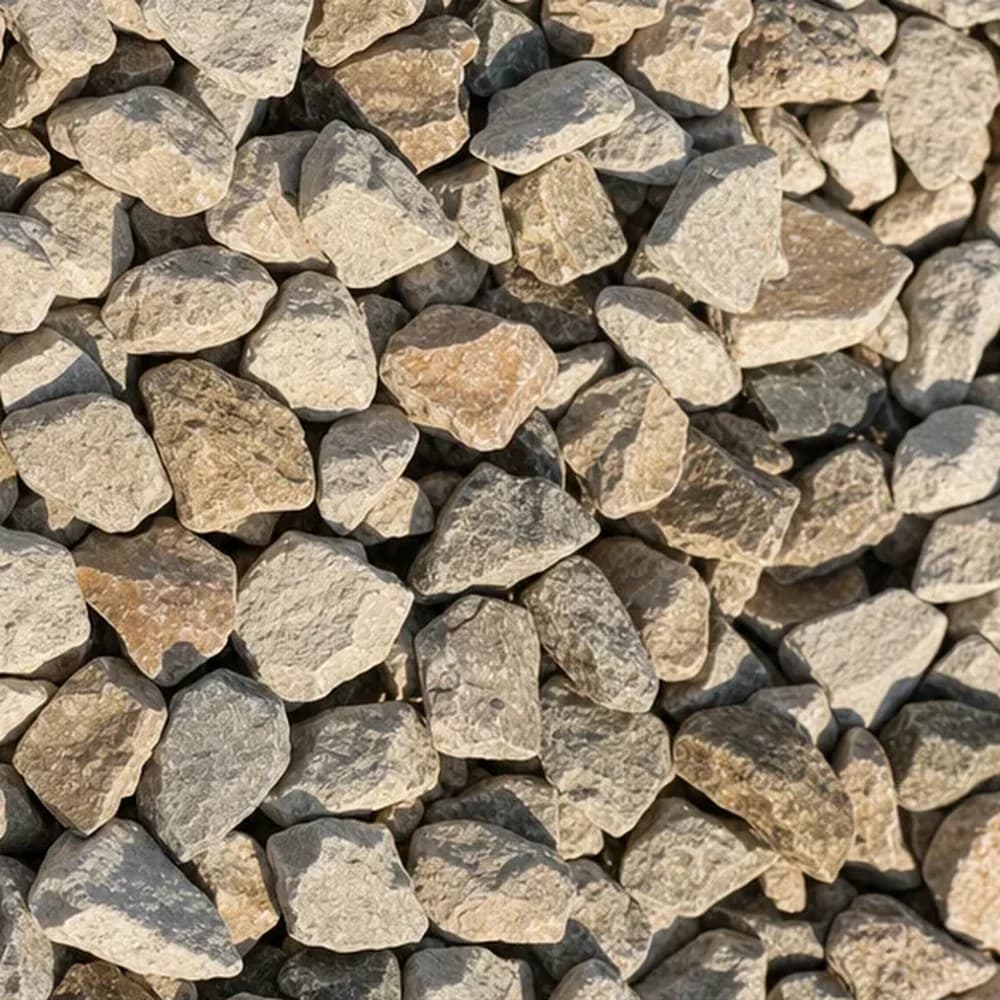
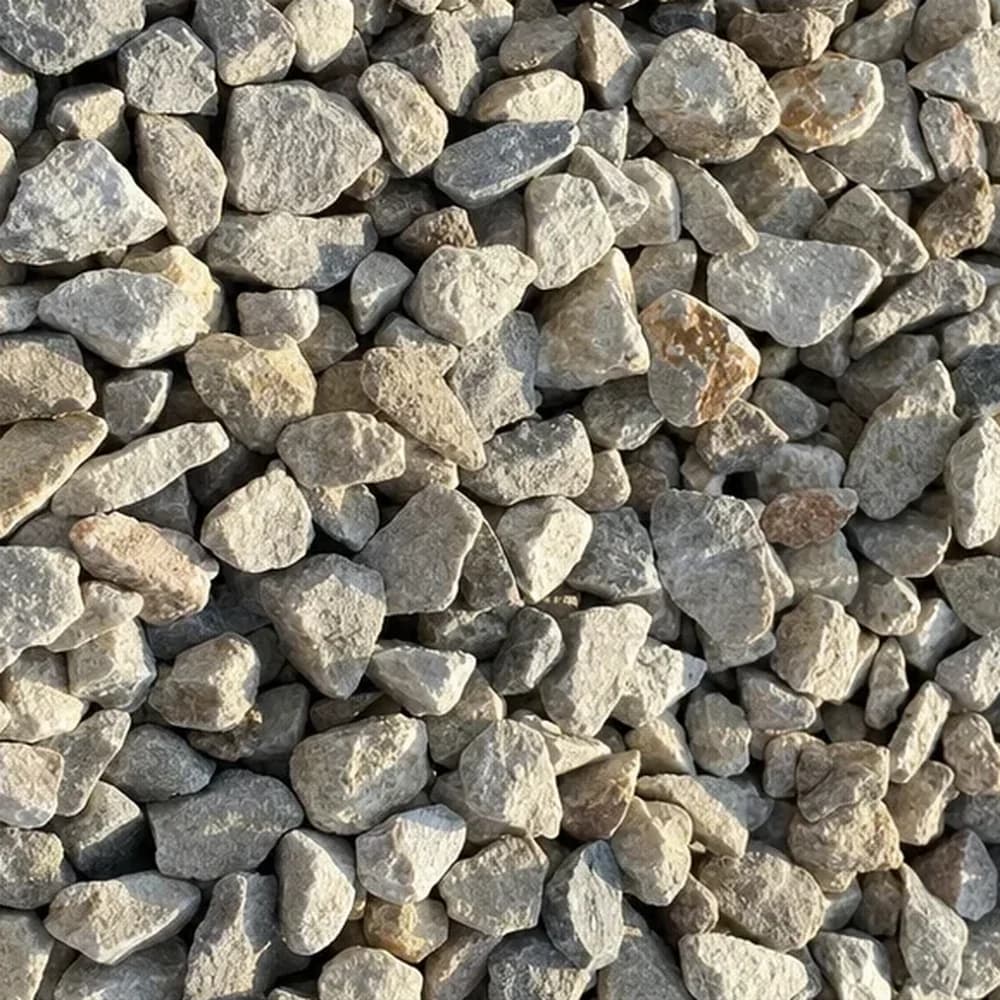
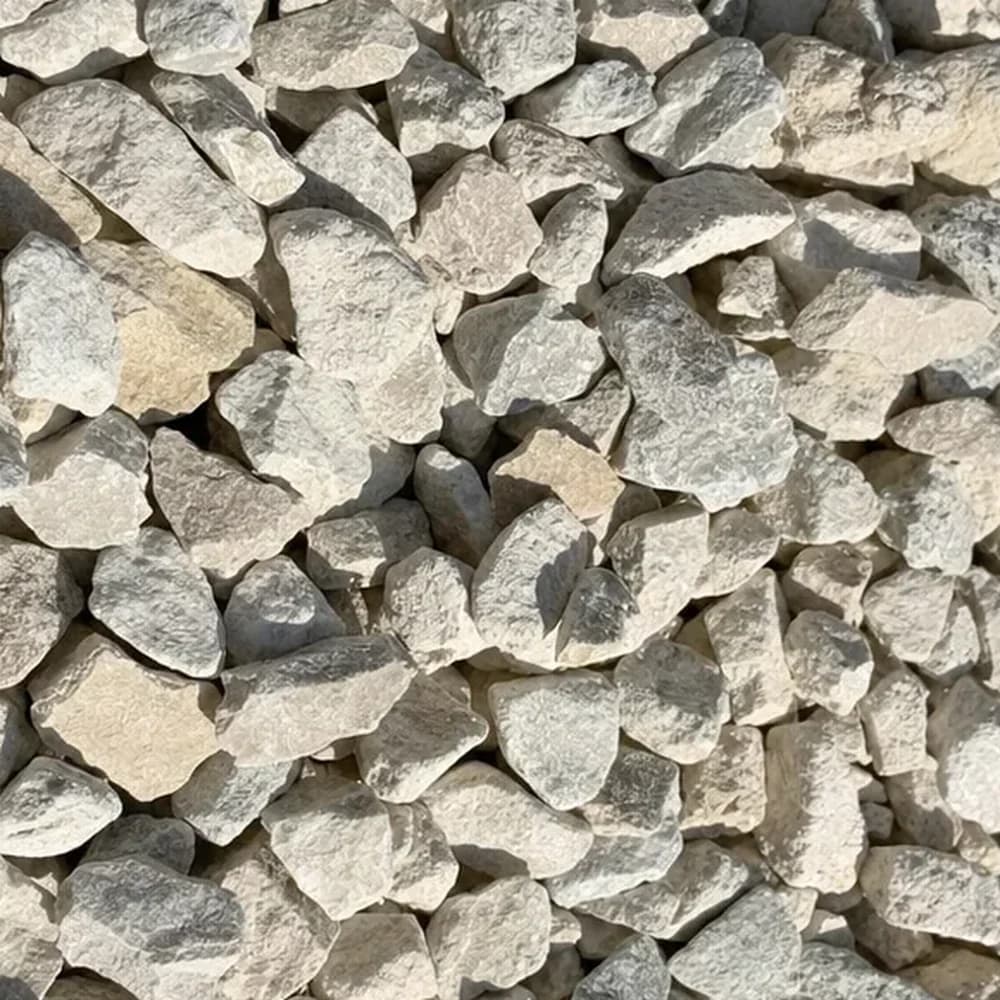
The pieces run 3/16 inch to 1 inch, angular, with fractured faces and sharp corners, graded to the #57 designation. Pick up a double handful and you can see daylight between the stones even when they are pressed together. There are no fines in it, so the pile does not dust and your boots stay clean, and rain runs straight through it instead of puddling on top.
Set that pile next to a heap of pea stone and the difference is obvious. Pea stone is small and rounded and rolls away under a boot; #57 is bigger, and the sharp faces catch against one another so it stays roughly where you put it. Set it next to 22A road gravel and the contrast goes the other way: 22A is full of gray dust that packs the gaps closed, which is exactly what you do not want in a drain.
Where open stone earns its keep on slow-draining ground
On clay, the volume of gaps is the whole value. A French drain, a curtain drain along the uphill side of a walkout, a perimeter drain at a foundation or a downspout run all work because water finds a faster path through the stone than through the soil, and a wrapped pipe carries it away. Behind a retaining wall the same voids stop water building pressure against the back of the wall through a wet March.
There are drier uses too. #57 is a standard coarse aggregate in concrete mixes, so the same stone that goes into a footing can go into the drain that keeps that footing dry. It also gets used at construction entrances and in yard aprons where grip and drainage matter more than a tidy finish, and as an open-graded base under pavers where a builder wants water to move rather than sit.
Michigan jobs where this is the wrong stone
Three come up repeatedly. Under a boat pad or a shed floor the surface needs to lock up, not drain, and dense-graded 21AA limestone or 22A road gravel are the materials for that. On a garden path, angular one-inch rock is unpleasant to walk on and rolls out of the path edge; a finer walkable stone belongs there. And against wave or ice attack on a lakefront, #57 is far too light to stay put, which is what RipRap exists for.
One more caution. A drain trench dug in clay will silt up from the sides if the stone sits straight against raw soil, so most installers line the trench with a filter fabric, wrap the stone in it, and lap the fabric over the top before backfilling.
Trench depth before frost gets into the ground
Season decides a lot here. Frozen ground in a Michigan winter stops trench work outright, so drainage jobs run from the thaw into late fall, and that window is shorter in the Upper Peninsula and the northern Lower Peninsula than it is down south. Frost reaches 42 inches under the Michigan Residential Code, which is why anything structural gets designed separately by a builder or your local building official rather than sized off a product page.
For the stone itself, the practical questions are how wide the trench is, how deep the stone bed has to be to cover the pipe with a working layer above it, and whether the trench has a consistent fall along its length. Plan those three before you measure, because they are what the arithmetic below runs on.
Working out 50 feet of construction entrance and a 60 foot pond toe
Take the entrance apron first, twelve feet wide and fifty feet long, at six inches.
- 12 x 50 = 600 square feet
- 6 inches is 0.5 feet, so 600 x 0.5 = 300 cubic feet
- 300 / 27 = 11.1 cubic yards
Then a shallow stone toe along a pond edge, sixty feet long and four feet wide, at eight inches.
- 60 x 4 = 240 square feet
- 8 inches is 0.667 feet, so 240 x 0.667 = 160 cubic feet
- 160 / 27 = 5.9 cubic yards
An open-graded base under a paver patio works the same way: a sixteen by twenty patio is 320 square feet, and at four inches that is 320 x 0.333 = 106.7 cubic feet, or 4.0 cubic yards, with the setting bed of stone screenings figured on top of it. These are hypothetical layouts, not jobs anyone has built. This site publishes about 2,800 lb per cubic yard for #57 and 3/4 inch crushed stone, or 1.40 tons per yard, so on that approximate figure the apron comes to 11.1 x 1.40 = 15.5 tons, the pond toe to 5.9 x 1.40 = 8.3 tons and the patio base to 4.0 x 1.40 = 5.6 tons. The stone calculator converts yards to tons, handles circles as well as rectangles, takes up to five areas in one run, and can add five percent for the stone that disappears into a soft trench bottom.
Where #67 and #4 stone sit either side of it
If #57 looks slightly too coarse for a narrow trench or a tighter bedding job, #67 Stone is the next step down and does the same work at a smaller size. If the flow is heavy, the trench bottom is rough, or you are building a proper construction entrance, #4 Crushed Stone is the larger option. And if the nearby 3/4 inch crushed stone has caught your eye, the two overlap heavily in size; the grading designation is what separates them on a spec sheet.
Once you have a figure, choose a date and a tonnage on this page. Delivery is arranged at checkout from your ZIP code, and the driver needs a clear approach and a spot where the load can be tipped without blocking the trench you are about to dig.
Quickly Calculate How Much You Need
Material: #57 Stone
How to Measure
Measure the length and width of your project area in feet
Decide on depth in inches (2" for landscaping, 4" for driveways)
Enter the values above and we'll calculate the tonnage you need
Need help figuring out the right amount? We can help!
Call or text us at (313) 930-8646 and we'll help you calculate the right quantity for your project.
Not sure how much you need? The Stone Calculator has depth guides, coverage charts and worked examples for this material.
Frequently Asked Questions About #57 Stone
Customer Reviews
Ordered #57 Stone from them and it was no hassle at all. Free delivery was a nice bonus, and I'm really happy with how everything turned out.
Paul K. · Detroit, MI · Verified Buyer
Ordered #57 Stone from this company and it showed up right when they said it would. Pricing was fair, and I'm really happy with the whole thing.
Chris R. · Ann Arbor, MI · Verified Buyer
Needed #57 Stone delivered and Michigan Rock Supply made it easy, kept me updated the whole time, and everything showed up right when expected.
Wendy C. · Grand Rapids, MI · Verified Buyer
Decided on #57 Stone from these guys and ordering was no hassle at all. The #57 Stone was clean and consistent, exactly what I needed. Really happy with the delivery and would definitely use them again.
Gina B. · Lansing, MI · Verified Buyer
Got #57 Stone from these guys and the whole order was no fuss. Delivery showed up when expected, and the material looked great. Really happy with how easy they made it.
Nicole W. · Grand Rapids, MI · Verified Buyer
#57 Stone has 5 verified customer reviews with an average rating of 5 out of 5.