Railroad Ballast in Michigan: Coarse Stone for Pads, Work Routes and Track
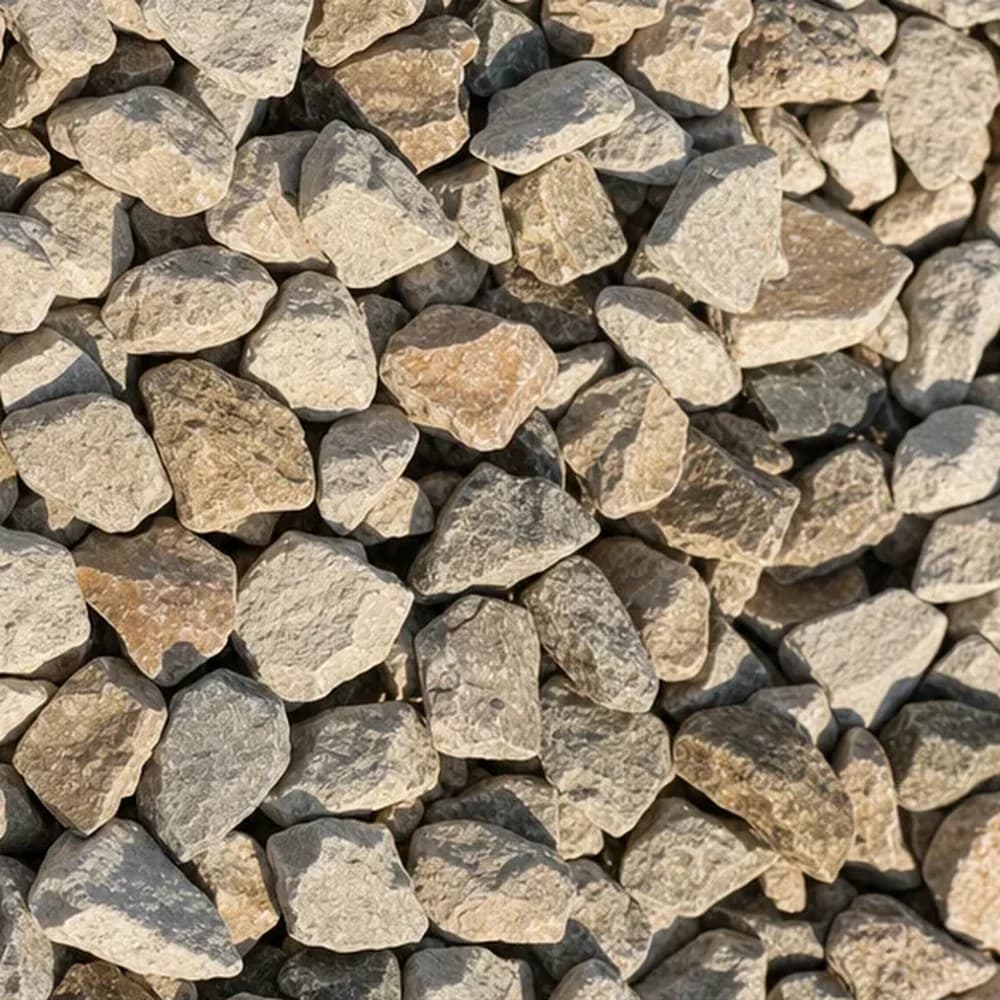
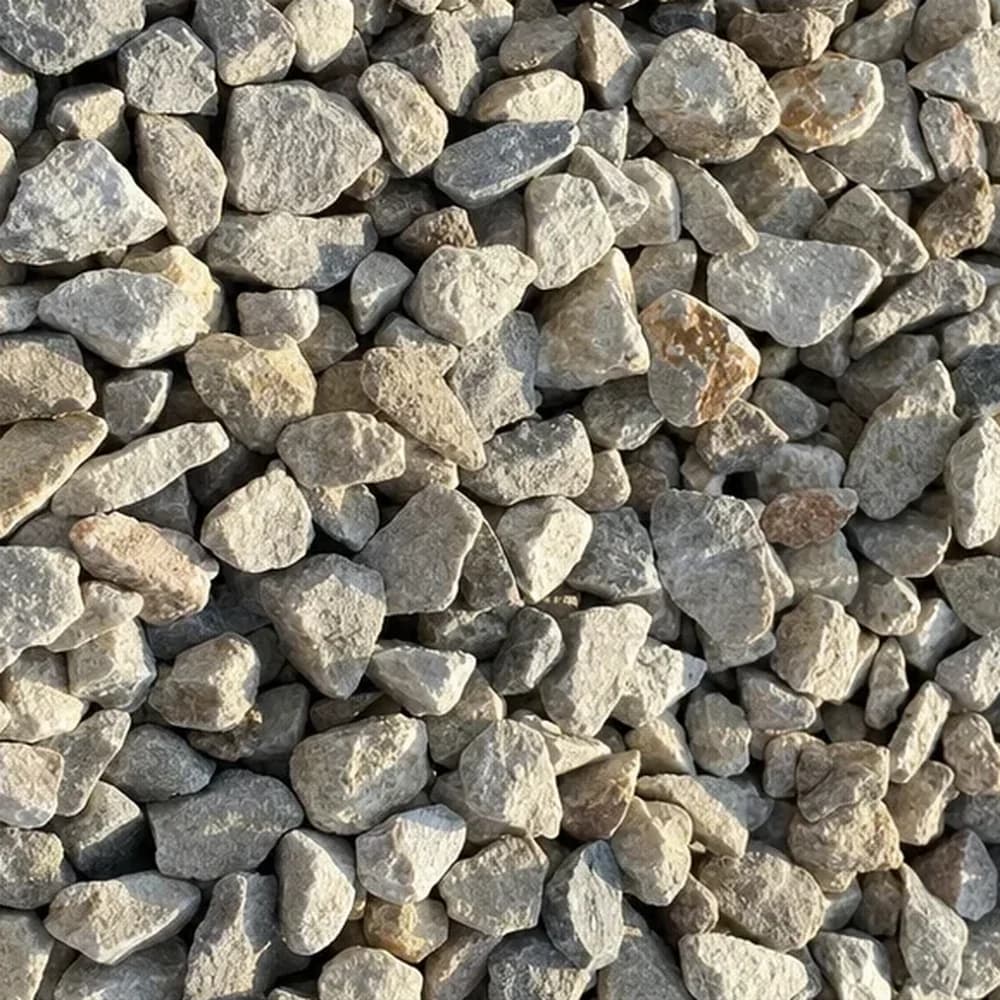
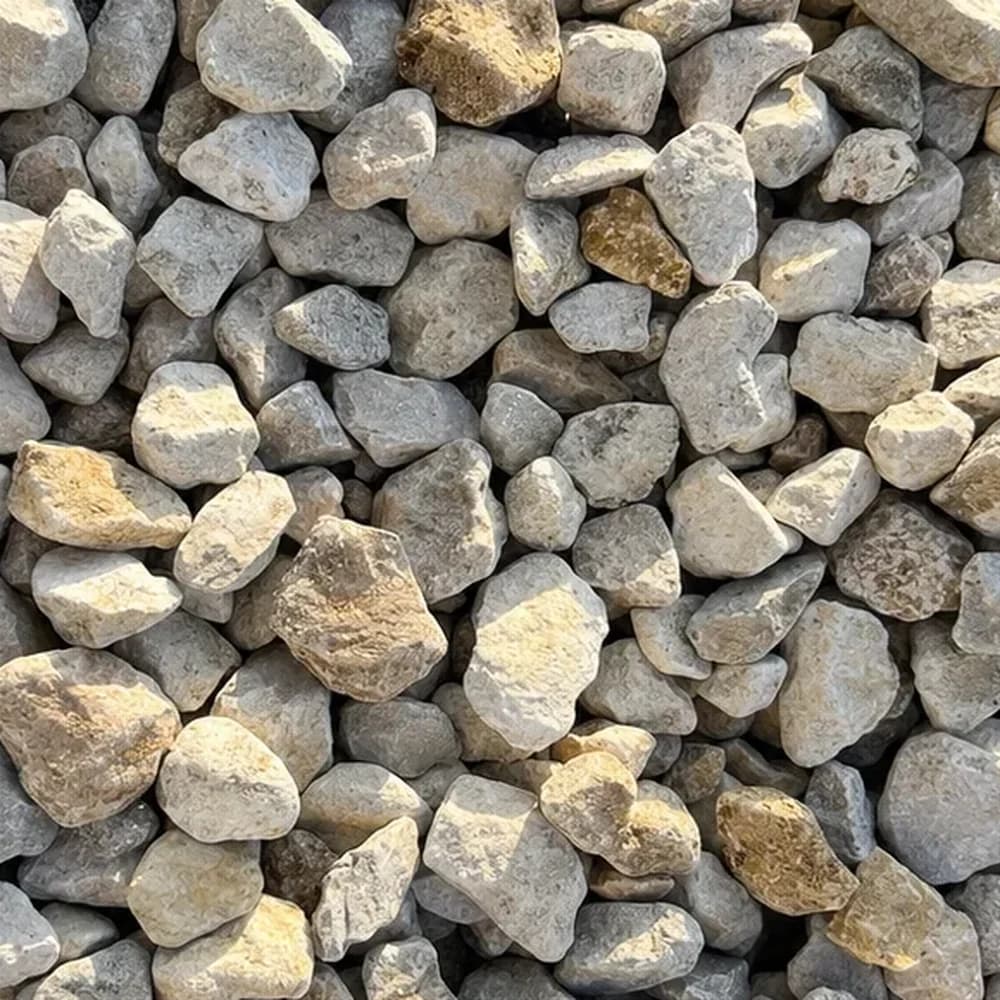
Rough, angular Railroad Ballast gives Michigan equipment pads and work routes an open foundation that bears weight and drains beneath the surface.
- Size: Roughly 1 inch to 2.5 inches
- Grading: Graded to interlock under load while draining freely
- Type: Large angular crushed stone
From $428 for 1 ton, delivery included (larger loads cost significantly less per ton)
Free delivery included
Free delivery anywhere in Michigan
Pick a delivery date
Weekday delivery, earliest Oct 30
“Ordered railroad ballast from Michigan Rock Supply and it showed up right when I needed it. Free delivery was a nice bonus, and I'm really happy with how easy the whole thing was.”
Karen C. · Verified Buyer
Get a Free Quote
Fill out the form and our sales team will get back to you within the hour.
Size and Grading
- Size
- Roughly 1 inch to 2.5 inches
- Grading
- Graded to interlock under load while draining freely
- Type
- Large angular crushed stone
The load of railroad ballast that fixes a yard entrance almost never goes in during the week the entrance is at its worst. That week is late March, when the frost is leaving, the ground has no strength in it, frost laws are limiting heavy trucks on county roads, and nothing can be compacted or graded properly anyway. The job gets planned then and built in June, and the gap between those two dates is the single most useful thing to understand about this material.
The gate approach that turns to soup as the frost lets go
The problem it solves is repeated heavy load on ground that periodically loses its strength. A gate or yard entrance that tractors, trailers and feed trucks cross daily. The apron in front of a pole barn. A work route to the back of a property that carries equipment rather than cars. In each case the failure is the same: the wheels churn, water cannot leave, and the surface pumps into mud that then dries into ruts.
Ballast answers that with size and shape. The pieces run roughly one inch to two and a half, large angular crushed stone graded so it interlocks under load while the voids between the pieces stay open. It settles together rather than packing tight, so it keeps carrying weight without closing off the path water uses to get out from under the traffic.
That last point is the one people miss. Ballast is not a finished surface and does not try to be. It is the open foundation layer beneath one.
How railroad ballast sits on lake plain clay and on sandy drift
The two halves of the state ask different things of it.
On the flat clay of the southeast, around Saginaw Bay and across the Thumb, the ground drains through ditches and tile rather than downward, and it stays saturated for weeks after the melt. A ballast layer there works by being the one thing in the profile that water can move through, so it has to be generous in thickness and it has to be kept separate from the clay below, or the clay works up into the voids and fills them.
On the sandy outwash and glacial drift of the west side and the north, the subsoil takes water away on its own. The value of ballast there is load spreading rather than drainage: stone large enough that it does not migrate down into loose sand under a wheel, giving a pad something to sit on. In the western Upper Peninsula, where stony drift sits over bedrock that comes close to the surface, the dig is often shallower than you expect and the layer ends up being about getting a level, stable platform on uneven ground.
Digging out the soft ground and keeping the stone below the finish course
The sequence is short and the order is not negotiable. Strip off the soft, churned or organic material until you reach ground that will hold a loaded bucket. Shape that subgrade so water has a direction to leave in, which takes thought on flat ground where there is no natural fall. On clay, lay a separation fabric. Place the ballast in a lift and track over it with the machine to settle the pieces into contact. Then put the finished layer on top of it.
That finish is a dense-graded material that actually compacts: 21AA limestone for a pad or apron, or 22A road gravel on a lane or work route. Frost reaches 42 inches under the Michigan Residential Code, and the local building official can require deeper footings in colder parts of the state, so any structure carried on the pad is a builder's design rather than a product-page calculation.
What the pad asks of you after its first winter
Less than a gravel drive, more than nothing. Through the first season the stones bed down into each other and into the ground, so the finished level drops slightly and one or two low spots usually appear where the subgrade was softest. Top those up in the second summer rather than the first spring, once the ground has dried and you can see where the real hollows are.
After that, the maintenance is mostly the surface course above it. Watch the edges, which is where a coarse layer spreads sideways under repeated turning, and keep the drainage route out from under the pad clear of silt and leaf litter. A layer that cannot discharge is just a reservoir.
A garden path, a new lawn and a hot tub pad, judged honestly
Three jobs bring people here and only one of them is even partly a fit.
A garden path is a flat no. One to two and a half inch angular stone is miserable to walk on, impossible to rake level and hostile to a wheelbarrow. Walkway Gravel at three eighths of an inch is what that route wants.
New lawn prep is also a no, and a harder one to undo, since stone that size has to come back out before anything will grow. Lawn work is Top Soil.
A hot tub pad is the partial yes, and only in the bottom of it. On wet clay, a coarse open lift under the compacted base keeps water moving beneath a pad that has to stay level through a Michigan winter. The tub never sits on ballast; it sits on the compacted layer above it, and the level tolerance is a conversation with whoever is building the pad.
Tons for a 12 by 14 pad lift and a 16 by 30 gate approach
Hypothetical layouts, both of them. Take the pad first, twelve by fourteen feet, with a six inch lift of ballast under the compacted base.
- 12 x 14 = 168 square feet
- 6 inches is 0.5 feet, so 168 x 0.5 = 84 cubic feet
- 84 / 27 = 3.1 cubic yards
The published figure here for #4 stone and ballast is about 2,900 lb per cubic yard, which is 1.45 tons per yard. So 3.1 x 1.45 = 4.5 tons.
Now the gate approach, sixteen feet wide and thirty feet out from the gate, at eight inches.
- 16 x 30 = 480 square feet
- 8 inches is 0.667 feet, so 480 x 0.667 = 320 cubic feet
- 320 / 27 = 11.9 cubic yards, and 11.9 x 1.45 = 17.3 tons
Round up on the approach. Coarse stone placed on ground that was soft enough to need it always loses some of itself into the subgrade, and the finished thickness comes out under the target if you order to the number exactly. The stone calculator will run the same arithmetic on up to five areas at once, handles circles, and offers a five percent addition.
Work back from when the ground will take a machine, then set the date and the tonnage on this page. Delivery is arranged at checkout from your ZIP code, and on a job like this the drop spot matters as much as the dig: a pile tipped where the loader can reach it from two sides saves half a day.
Quickly Calculate How Much You Need
Material: Railroad Ballast
How to Measure
Measure the length and width of your project area in feet
Decide on depth in inches (2" for landscaping, 4" for driveways)
Enter the values above and we'll calculate the tonnage you need
Need help figuring out the right amount? We can help!
Call or text us at (313) 930-8646 and we'll help you calculate the right quantity for your project.
Not sure how much you need? The Stone Calculator has depth guides, coverage charts and worked examples for this material.
Frequently Asked Questions About Railroad Ballast
Customer Reviews
Had railroad ballast delivered by Michigan Rock Supply and ordering was no hassle at all. Driver was friendly and careful about where he placed it, really happy with the whole thing.
Kevin J. · Grand Rapids, MI · Verified Buyer
Decided on railroad ballast from this company, and they kept me updated the whole time with free delivery included.
Diane A. · Detroit, MI · Verified Buyer
Would Order Again
The process with Michigan Rock Supply was clear and easy to follow. The railroad ballast was a great fit for the job. Communication was clear, and I would gladly order again.
Christine E. · Lansing, MI · Verified Buyer
Ordered railroad ballast from Michigan Rock Supply and it showed up right when I needed it. Free delivery was a nice bonus, and I'm really happy with how easy the whole thing was.
Karen C. · Warren, MI · Verified Buyer
Decided on railroad ballast from Michigan Rock Supply and it was exactly what I needed. Delivery arrived right on schedule, and I'd definitely order from them again.
Lisa D. · Sterling Heights, MI · Verified Buyer
Railroad Ballast has 5 verified customer reviews with an average rating of 4.8 out of 5.
Railroad Ballast delivery across Michigan
- Detroit
- Grand Rapids
- Warren
- Sterling Heights
- Ann Arbor
- Lansing
- Dearborn
- Clinton Township
- Canton
- Macomb
- Livonia
- Troy