Fill Dirt in Michigan: Clean Earth for Raising Ground and Building Pads
Michigan's freeze-thaw ground calls for Fill Dirt when pole barn pads, backfill, or rough grades need clean, compactable earth.
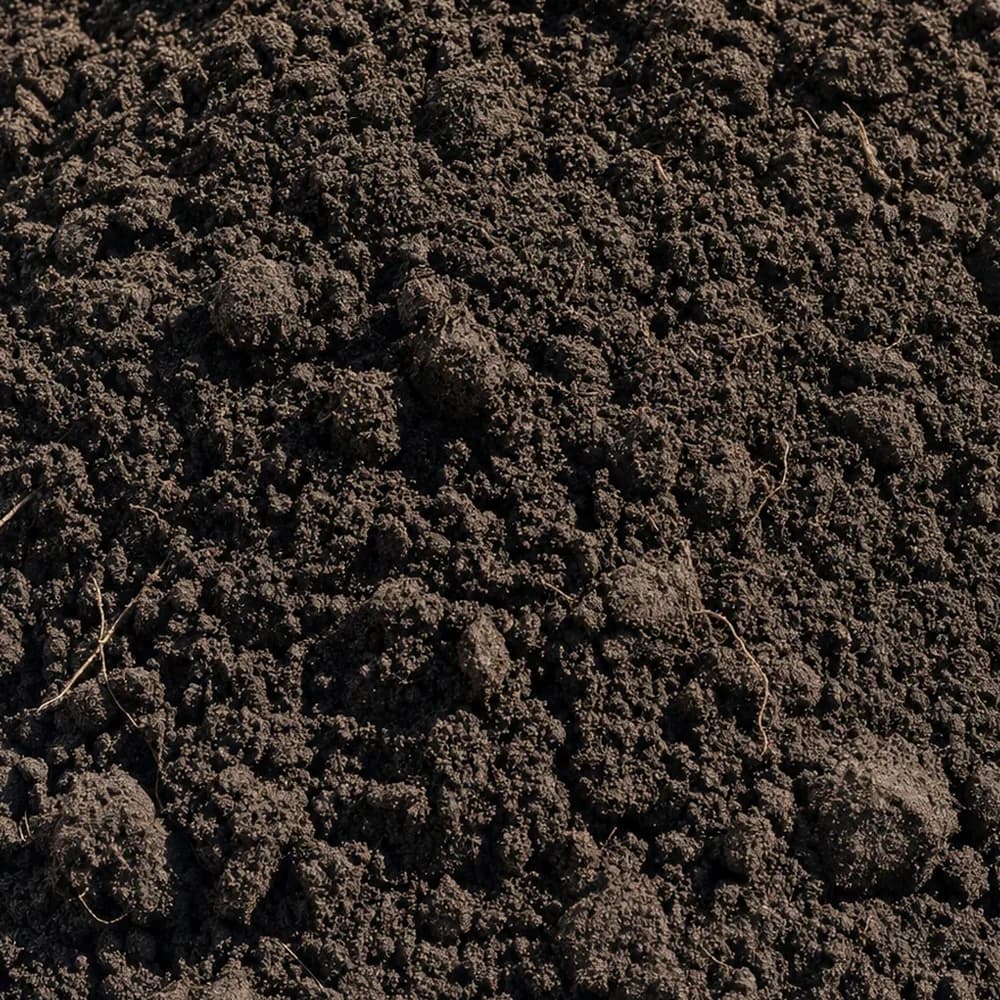
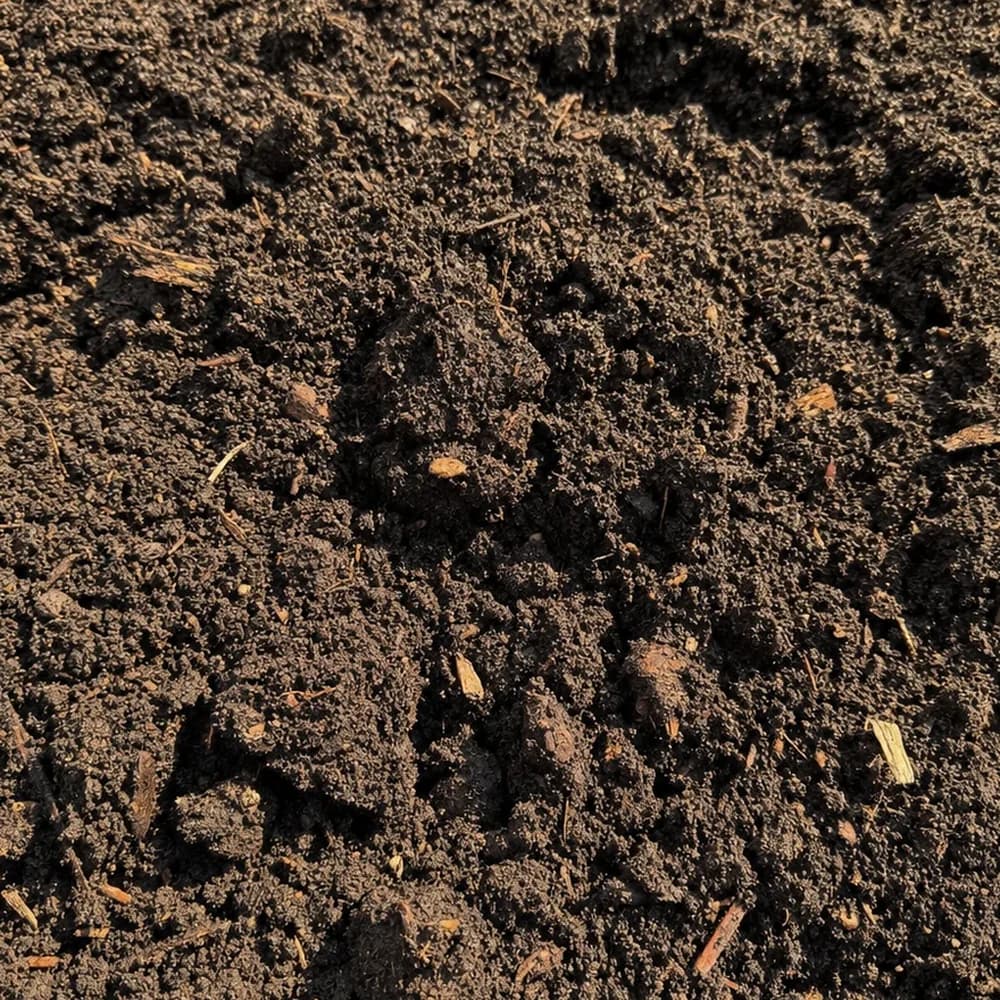
- Size: Screened to remove large rocks, roots and debris
- Grading: Minimal organic matter
From $251 for 1 ton, delivery included (larger loads cost significantly less per ton)
Free delivery included
Free delivery anywhere in Michigan
Pick a delivery date
Weekday delivery, earliest Oct 30
“Ordered fill dirt from this company and ordering was easy from start to finish. The delivery showed up when expected and the fill dirt was just what I needed.”
Laura T. · Verified Buyer
Get a Free Quote
Fill out the form and our sales team will get back to you within the hour.
Size and Grading
- Size
- Screened to remove large rocks, roots and debris
- Grading
- Minimal organic matter
The ground most people are standing on when they order fill dirt is ground that is too low. On the flat lake plain in the southeast and around Saginaw Bay it is a corner of the yard that holds meltwater until May because the clay has nowhere to send it. Up in the sandy counties it is more often a hollow between two moraine ridges, or a pole barn site that has to come up a foot before anything else can start. Fill dirt is the material for that problem: screened to take out large rocks, roots and debris, with minimal organic matter in it, bought for volume rather than for anything that has to grow.
Choose fill dirt when the problem is volume rather than growth
Take it when the question is how to get the ground higher, firmer or flatter. It suits raising a low area, building a rough grade for a pad or a new lot, backfilling around a foundation or a retaining wall, filling holes and voids where a stump or an old structure came out, and shaping contours so runoff has a planned route when the snow goes.
The reason it works there is what has been left out of it. With little organic material in it, there is nothing much to decompose, so the ground does not keep dropping the way it does when an organic-rich soil is used for bulk. It also compacts, which means a shaped grade can be made stable enough to build on rather than staying loose.
The jobs that want top soil or 21AA instead
Two mistakes recur. The first is using fill dirt where something has to grow. It is not a planting medium and will not behave like one, so lawns, beds and anything seeded want screened top soil as the finishing layer, or garden soil where the planting is going into a bed. Build the grade with fill, then put the growing layer on last.
The second is treating it as a base. Earth under a shed, a pad or a drive is the subgrade, not the base course. The layer that carries the load is compacted 21AA limestone, or 22A road gravel where a hard-packing road mix is wanted. Fill dirt gets the level right so that base can be built on something consistent.
Raising a boat pad, a soft lane and the corner that ponds every April
A parking pad for a boat, a trailer or an RV usually starts as a patch of lawn that sits an inch or two lower than everything around it. Fill brings the level up and gives the pad a slight fall so water runs off the finished surface rather than standing on it, after which the stone base goes on top.
A long rural lane is the same problem stretched out. One or two soft stretches, often where the lane crosses a wet hollow or a clay flat, swallow gravel year after year because the ground under them is too low and stays saturated through the thaw. Fill raises that stretch out of the water table it has been sitting in, and the gravel on top finally has somewhere firm to live.
The low corner of a yard is the smallest of the three and the most common. Bring it up so it drains toward a ditch, a swale or a drain run, compact it, then finish with top soil and seed.
How far the fill goes, and where the last six inches come from
Think of the work as two layers with different jobs. Below is the fill, shaped and compacted, taking the site from the level it is at to the level you want. Above is whatever the surface has to be: soil and seed for turf, stone for a pad or a lane, mulch for a bed.
Compact the fill in lifts rather than tipping the lot and driving over it once. Each lift should be shallow enough for your plate or roller to actually reach the bottom of it, and the whole layer needs to be reasonably dry when you do it. Then shape the finished contour before anything goes on top, because a fall that was built into the fill will still be there in ten years, and one that was raked into the topsoil will not.
Yards and tons for a 20 by 36 boat pad lift and 140 feet of soft lane
Take the pad first, twenty feet by thirty-six, raised eight inches.
- 20 x 36 = 720 square feet
- 8 inches is 0.667 feet, so 720 x 0.667 = 480 cubic feet
- 480 / 27 = 17.8 cubic yards
This site publishes about 2,400 lb per cubic yard for dry fill dirt, which is 1.20 tons per yard, so 17.8 x 1.20 is roughly 21 tons. The same listing notes wet fill dirt can reach 3,000 lb per cubic yard, 1.50 tons per yard, which would take the same volume to about 27 tons. That gap is worth knowing about in a wet spring, because you are buying by weight and carrying water.
Now the soft stretch of lane, one hundred and forty feet long and ten feet wide, brought up six inches before the gravel goes back on.
- 140 x 10 = 1,400 square feet
- 6 inches is 0.5 feet, so 1,400 x 0.5 = 700 cubic feet
- 700 / 27 = 25.9 cubic yards, and 25.9 x 1.20 is about 31 tons
Both are hypothetical layouts rather than jobs anyone has built. The dirt calculator runs the same sums, handles circles and up to five areas at once, and adds an extra ten percent by default, which on fill work is worth keeping, since compaction takes volume out of every load.
Playgrounds: fill dirt shapes the ground, mulch makes the surface
A play area is the one assigned example that belongs to another product. Fill dirt has a role below the surface, leveling the area and building a slight fall so it does not sit wet, but nobody should be landing on bare earth. The cushioned surface layer is Shredded Mulch, and the sand for a play box is mason sand. Build the grade first, let it settle, then place the surface.
When you have a figure, pick a tonnage and a delivery date on this page. Delivery is arranged at checkout from your ZIP code, and on a bulk load like this the drop spot matters more than usual: the truck needs firm ground and a clear route, and a load tipped close to the work saves hours of wheelbarrow runs.
Quickly Calculate How Much You Need
Material: Fill Dirt
How to Measure
Measure the length and width of your project area in feet
Decide on depth in inches (2" for landscaping, 4" for driveways)
Enter the values above and we'll calculate the tonnage you need
Need help figuring out the right amount? We can help!
Call or text us at (313) 930-8646 and we'll help you calculate the right quantity for your project.
Not sure how much you need? The Dirt Calculator has depth guides, coverage charts and worked examples for this material.
Frequently Asked Questions About Fill Dirt
Customer Reviews
Ordered fill dirt from this company and ordering was easy from start to finish. The delivery showed up when expected and the fill dirt was just what I needed.
Laura T. · Warren, MI · Verified Buyer
Got fill dirt from Michigan Rock Supply and it was just what I ordered. Delivery was easy, and I'm really happy with how it all went.
Angela G. · Lansing, MI · Verified Buyer
Had fill dirt delivered from Michigan Rock Supply and the free delivery was a nice bonus. The driver was friendly and really careful about where he placed it, so I'm super happy with the whole thing.
Brian R. · Detroit, MI · Verified Buyer
Went with the team for fill dirt, and I'm really happy with it, delivery showed up on the day they promised.
Hank F. · Detroit, MI · Verified Buyer
Fill Dirt has 4 verified customer reviews with an average rating of 5 out of 5.