3/4" Crushed Stone in Michigan: The Layer That Interlocks and Still Drains
Plan a Michigan driveway base for winter movement, not just summer traffic. 3/4" Crushed Stone helps form a draining, interlocked support layer.
- Size: Approximately 3/4 inch
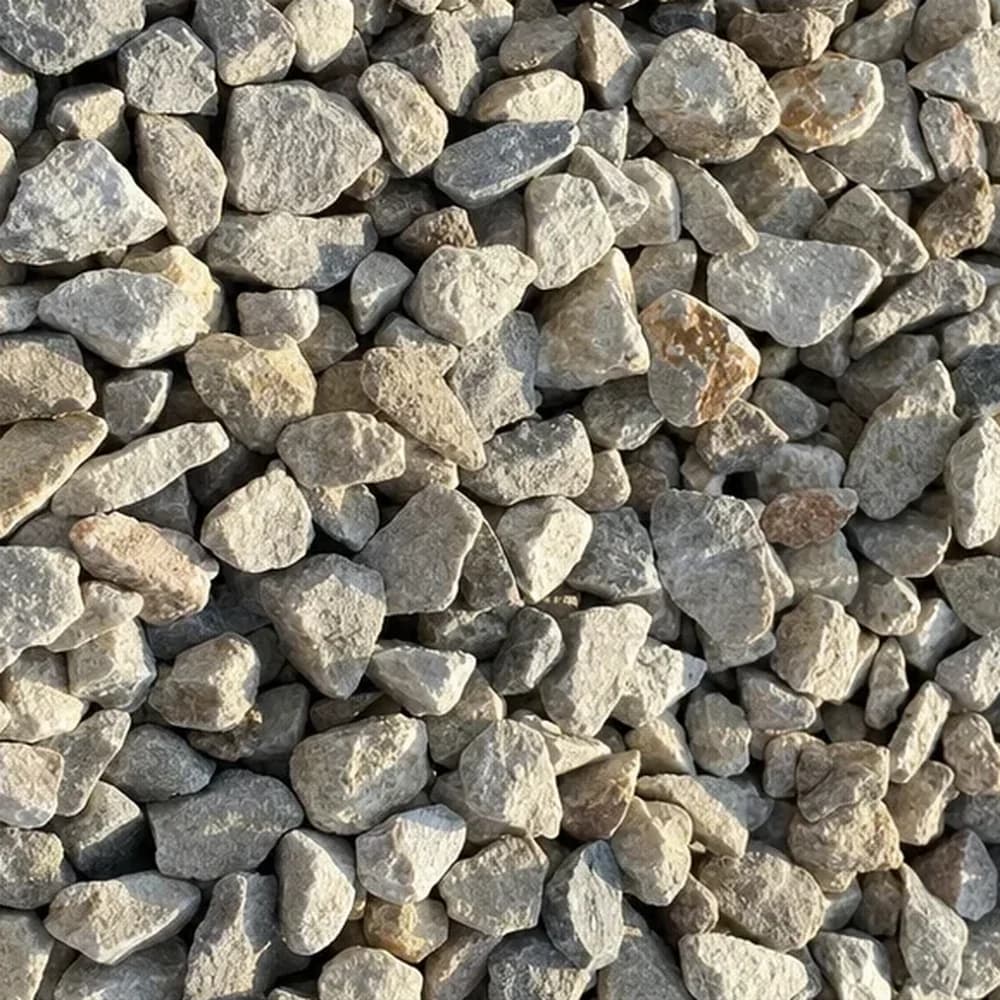
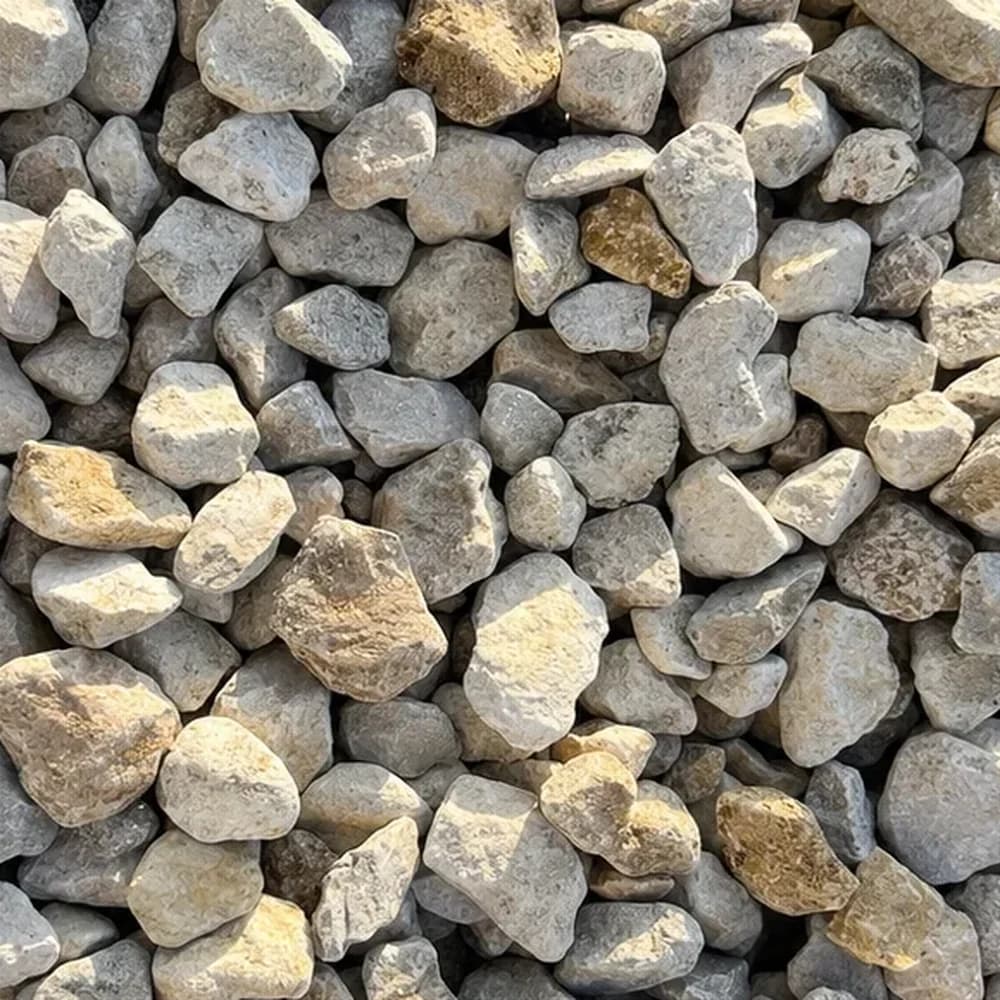
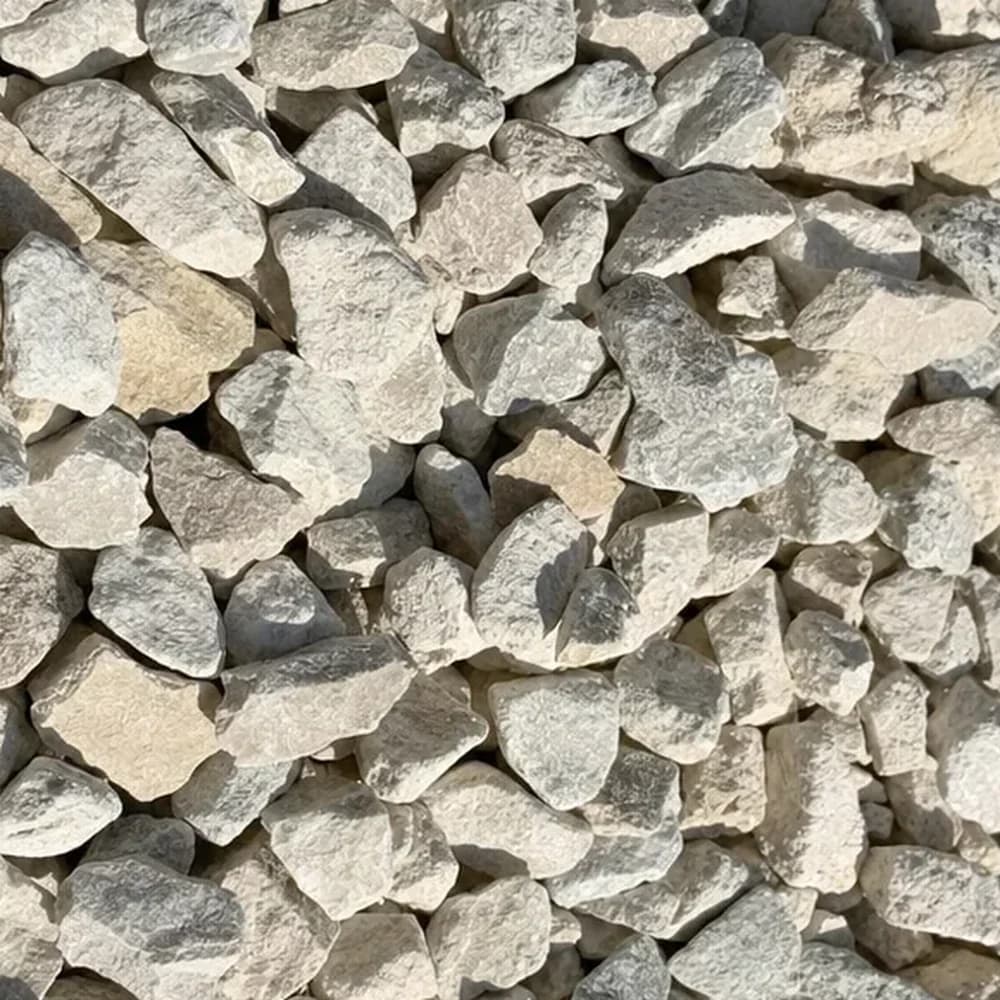
- Type: Angular crushed stone
From $400 for 1 ton, delivery included (larger loads cost significantly less per ton)
Free delivery included
Free delivery anywhere in Michigan
Pick a delivery date
Weekday delivery, earliest Oct 30
“Ordering from Michigan Rock Supply was straightforward from start to finish. The 3/4" crushed stone was a great fit for the job. I appreciated how easy they made the entire process.”
Sandra P. · Verified Buyer
Get a Free Quote
Fill out the form and our sales team will get back to you within the hour.
Size and Grading
- Size
- Approximately 3/4 inch
- Type
- Angular crushed stone
The calendar decides this job more than the design does. A layer of 3/4" crushed stone only does its work if it has been compacted, and compaction needs ground that is not frozen and not saturated, which in practice means the weeks between the spring thaw and the first hard freeze. Order it for a shed pad in late March, on lake plain clay that is still giving up its frost, and the plate will bounce on soft ground and the layer will never tighten. The same load placed in June goes down in lifts, locks against itself and holds a flat, draining platform for years.
The weeks when a plate will actually bite
Frost reaches 42 inches under the Michigan Residential Code, and the ground releases it from the top down over several weeks. Until the subgrade has drained and firmed, nothing you compact on top of it is really compacted; the whole layer is riding on a soft base.
The season is shorter than the map suggests, too. In the Upper Peninsula and the northern Lower Peninsula the thaw comes late and the first hard freeze comes early, so a pad planned for October up north is a gamble in a way the same pad in the south is not. County road agencies also post the seasonal weight limits known as the frost laws on many roads through the thaw, which is one more reason the heavy end of the building season starts later here than the calendar implies. The sensible pattern is the one most people here already follow: plan the job over winter, order after the ground has dried out.
Grading the pad and setting the edge before the load lands
Work done before the truck arrives decides how the stone behaves. Strip sod and soft organic material out of the footprint, because anything that rots under a pad turns into a low spot later. Shape the subgrade to the fall you want so water leaves sideways instead of pooling under the stone. Set the edge, whether that is timber, a curb of paving or simply a cut face, since an angular stone with no fines still creeps if nothing holds its edge.
Then decide where the pile goes. Plan for it to be tipped on ground you are not about to build on, close enough that the wheelbarrow runs are short, and on a level spot, because a heap of round-ish washed stone on a slope walks downhill on its own.
Shed pads, garage aprons and the drainage zone behind a walkout wall
Under a shed, a garage extension or an equipment pad, this stone is the layer that carries the load and lets water through at the same time. The broken faces wedge against each other under compaction, so the platform holds its shape, while the gaps between pieces mean water is not trapped under the slab or the floor to freeze and lift it.
Behind a retaining wall, the same properties do a different job. Water that builds up behind a wall pushes on it, and a free-draining backfill gives that water a route down to a drain instead. Around a perforated line in a service trench, the stone beds the pipe and keeps flow moving. It also works as a construction entrance on a wet site, where the angular pieces bite into soft ground rather than skating over it.
Where drain rock takes over from 3/4 inch crushed stone
The two listings look similar on a ticket and are bought for different reasons. This stone is a nominal three quarters of an inch, angular and compactable, which is why it suits a layer that has to carry weight and drain. Drain Rock runs larger, from 3/4 inch up to an inch and a half, and is washed to take out fines and dust, which gives it bigger, cleaner voids for pure water work such as a leach field, a foundation perimeter drain or a deep wall drainage zone.
The rule of thumb is what sits on top. If something will bear on the layer, take the angular compactable stone. If the layer only ever has to move water, take the washed one. #57 Stone sits alongside both, overlapping in size, separated by its grading designation on a spec sheet. And when the job is a driving surface rather than a base, neither belongs there: that is compacted 21AA limestone with driveway gravel on top.
Tons for a 14 by 22 shed pad and a 32 foot wall drainage zone
Take the pad first, fourteen feet by twenty-two, with six inches of stone.
- 14 x 22 = 308 square feet
- 6 inches is 0.5 feet, so 308 x 0.5 = 154 cubic feet
- 154 / 27 = 5.70 cubic yards
This site publishes a weight of about 2,800 lb per cubic yard for its #57, #67 and 3/4 inch crushed stone family, roughly 1.40 tons per yard, so 5.70 x 1.40 works out at about 8 tons.
Now the drainage zone behind a wall, thirty-two feet long, a foot wide and three feet deep.
- 32 x 1 = 32 square feet of footprint
- 32 x 3 = 96 cubic feet
- 96 / 27 = 3.56 cubic yards, and 3.56 x 1.40 is about 5 tons
The third example is much smaller. A downspout splash area five feet by four at four inches comes to 20 x 0.333 = 6.7 cubic feet, a quarter of a cubic yard, about a third of a ton. An angular stone stays put there better than a rounded one, though at the front of a house most people prefer the look of River Rock. All three are hypothetical layouts. The stone calculator converts yards to tons, handles circles and up to five areas at once, and adds an extra five percent by default that is worth keeping on a pad, since compaction closes the layer down.
The rut that shows up in March, and the half ton that fixes it
Even a well-built pad moves a little in its first year. Frost lifts the platform and sets it down slightly differently, traffic lanes settle, and the edges lose a little stone where nothing is holding them. On a pad over clay, a wet March will usually show you the one corner where the subgrade was never quite dry enough.
The fix is small if you catch it early. Rake the surface level after the thaw, top up the settled patches, re-seat any edge that has been pushed out, and keep leaves and soil out of the drainage zone behind a wall so the voids stay open. A half ton put back in the second spring is normal, and it costs far less effort than lifting the work later.
Quickly Calculate How Much You Need
Material: 3/4" Crushed Stone
How to Measure
Measure the length and width of your project area in feet
Decide on depth in inches (2" for landscaping, 4" for driveways)
Enter the values above and we'll calculate the tonnage you need
Need help figuring out the right amount? We can help!
Call or text us at (313) 930-8646 and we'll help you calculate the right quantity for your project.
Not sure how much you need? The Stone Calculator has depth guides, coverage charts and worked examples for this material.
Frequently Asked Questions About 3/4" Crushed Stone
Customer Reviews
Straightforward and Helpful
Ordering from Michigan Rock Supply was straightforward from start to finish. The 3/4" crushed stone was a great fit for the job. I appreciated how easy they made the entire process.
Sandra P. · Ann Arbor, MI · Verified Buyer
Ordered crushed stone from this company and the price felt fair for what I got. The driver was friendly and careful about where he placed it, which made the whole thing easy.
Scott I. · Ann Arbor, MI · Verified Buyer
Went with these guys for crushed stone and I'm really happy I did. Pricing was fair and the delivery showed up right where I needed it. I'd definitely order from them again.
Jennifer H. · Ann Arbor, MI · Verified Buyer
Decided on crushed stone from the team, ordering was smooth, the price felt fair, and I'm really happy with how it all turned out.
Dana S. · Grand Rapids, MI · Verified Buyer
3/4" Crushed Stone has 4 verified customer reviews with an average rating of 5 out of 5.
3/4" Crushed Stone delivery across Michigan
- Detroit
- Grand Rapids
- Warren
- Sterling Heights
- Ann Arbor
- Lansing
- Dearborn
- Clinton Township
- Canton
- Macomb
- Livonia
- Troy