Pea Gravel Calculator: Pea Stone by the Ton, Not by Eye
Enter your project dimensions
Two orders miss on this material, and they miss in opposite directions. Somebody lays a path two inches deep on the sandy ground near the Lake Michigan shore, finds soil and weed fabric showing through by July, and orders again. Somebody else puts nine inches under a swing set without checking the tonnage and is surprised by what comes off the truck, because a fall zone at that depth is a different order of magnitude from a garden path. What sits between those two mistakes is a measurement and a depth, which is all this pea gravel calculator needs.
Sizing a fire ring surround and a dog run in one sitting
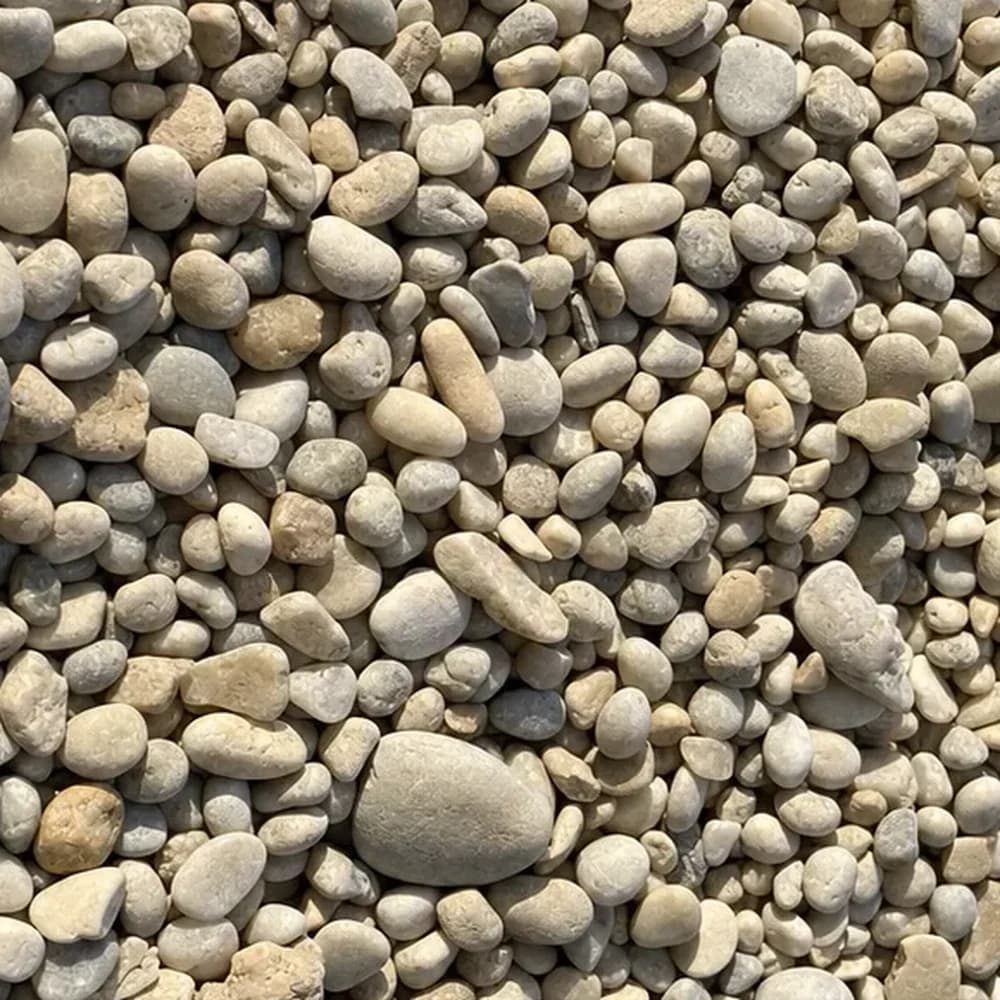
Pea stone is the name on most Michigan tickets for the rounded 3/8 inch stone, and it turns up in small, awkward shapes rather than long runs.
A hypothetical fire ring surround, 16 feet across, finished at 3 inches:
- a 16-foot circle is 201 square feet
- 201 x 3 / 12 = 50.3 cubic feet
- 50.3 / 27 = 1.86 cubic yards
- 1.86 x 1.4 = 2.6 tons
A dog run beside the garage, 12 by 10 feet at the same depth, is 120 square feet, 30 cubic feet, 1.11 cubic yards and 1.6 tons. Two small projects, just over four tons between them, one delivery.
Now the play zone, for contrast. An 18 by 16 foot fall area under a climbing frame at 10 inches is 288 square feet, 240 cubic feet, 8.9 cubic yards and 12.4 tons. Same material, same yard, six times the stone. A fall zone is maintained at 9 to 12 inches and the equipment manual sets that figure, not this page. What the tonnage buys is landscape pea stone: it is not sold as certified playground surfacing, and the required depth, the fall-zone footprint and the maintained depth all come from the equipment manufacturer's instructions rather than from us.
Where the pea gravel calculator asks for a diameter
Circle mode takes one measurement, the distance straight across at the widest point, which is why fire pits and tree surrounds are easier here than anywhere else on the site. Rectangle mode handles runs and pads. Multiple areas totals up to five pieces, so the path, the surround and the run can go in together.
Dimensions in feet, depth in inches from 0.25 to 24. Choose pea stone in the material list, decide on the 5 percent allowance for compaction and spillage, and the answer comes back as cubic yards, tons and cubic feet. Ticking the allowance is sensible on anything you will be raking out to an edge, where a little always disappears into the grass.
Soft underfoot, 2,800 pounds to the cubic yard
This surprises people who have walked on both. A cubic yard of pea stone runs about 2,800 lb, or 1.4 tons, which is the same published figure as #57 stone and 3/4 inch crushed stone. Rounded pebbles nest more tightly than they look like they should, so the soft feel underfoot buys you no weight relief at all. River rock is the lighter one, nearer 2,700 lb.
Practically, that means a ton of pea stone covers about 116 square feet at 2 inches and about 77 at 3. At the 10 to 12 inches a fall zone needs, one ton covers roughly 19 to 23 square feet, which is a patch smaller than a parking space. Calculate those, never estimate them.
Bare feet, boots and tires want three different stones
- Pea stone is for bare feet and places that never see a wheel: fire pit surrounds, dog runs, play areas, small patios and drip lines. Round stone rolls underfoot on a slope and under tires anywhere.
- Walkway gravel is the angular option for the same paths. It binds instead of rolling, which is the right answer on any grade steeper than about 5 percent and on a route that gets used in boots all winter.
- River rock is larger and decorative, for beds, borders and dry creek beds rather than for walking.
One property often uses all three, and the same footprint run through the tools twice will show you that the volume does not change while the tonnage does: run river rock through its own tool and compare.
Keeping it where you put it, on sand and on clay
Depth is the first half of containment. Under 2 inches and the base shows through as soon as traffic parts the stone; over 3 and walking on it feels like walking in dry beach sand. Two to three inches, on ground that has been raked flat, is the working range for anything people walk on.
Edging is the other half. Steel, aluminum, timber or paver edging set about an inch proud of the gravel holds it in; edging installed flush lets the stones roll out over one season. On slopes above roughly 5 percent, rain and boots will still carry stone downhill, so either use a honeycomb stabilizing grid under it or switch to angular stone for that stretch.
The ground matters too. On the sandy soils of the west side, pea stone laid straight onto loose sand works down into it, so a couple of compacted inches of stone screenings underneath is worth the extra layer. On the heavy clay of the southeast, the problem is the opposite: water sits under the stone through the thaw and the whole area turns to soup, so the fix is a drainage path out of the area before any stone arrives.
Rake a path smooth spring and fall, keep a bucket or two back for the traffic line, and top up rather than rebuilding. When the tonnage looks right, set the quantity and a date on the product page and finish at checkout, where delivery is arranged by ZIP code and how the load arrives is set out. Leave the truck somewhere firm to tip, and remember that a pile of round stone spreads out further than an angular one does.
Common questions
The dog run wraps around the back of the garage in an L shape. Do I measure it as one piece?
Measure it as two. Cut the L where the corner is, enter each leg as its own rectangle under the multiple-areas option, and take the second measurement from where the first one ended so the corner is not counted twice. The tool adds up to five areas into one tonnage, which is what you want on the order.
There is a timber border around the run. Does that count as part of the area?
No. What you are filling is the ground inside it, so take your dimensions from the inner faces of the timber and leave the border itself out. Then finish the stone about an inch down from the top edge, because that lip is what keeps round stone from wandering onto the lawn.
I want a firm base under the pea stone. How do I order both?
Run the same footprint twice. Screenings or a similar compacted bed usually goes in at 2 inches, then the pea stone at 2 to 3 inches on top. Calculate them separately because they use different weights, then put both quantities on one delivery. The base is what stops chair legs and table feet sinking into a seating area.
My path curves through the garden with no straight edge at all. How do I get a number?
Measure the length along the middle of the curve with a wheel or a tape laid in sections, use your normal path width, and treat it as a rectangle of that length. Curves add a little on the outside and lose it on the inside, so the result is closer than it feels, and rounding up covers the difference.
The path has thinned out in the middle. Can I just top it up?
Yes, and it is a small order. Measure the depth of stone still there in several spots, take the difference between that and the depth you want, and run the path at that thinner figure. Half an inch over a 60 by 3 foot path is under half a ton. Rake the old stone level first, or the new material simply follows the hollows.
Related calculators
Under two tons covers most patios.
3/8 inch natural pea gravel, priced by the ton, delivered free.