Fill Dirt Calculator: Yardage for Grade, Not for Growing
Enter your project dimensions
Fill orders miss in two directions on Michigan ground, and both are avoidable. On the flat clay of the southeast lake plain, a low corner that ponds every March gets measured at its deepest point, so the load arrives half again bigger than the hole. On the sandy west side, a trench gets measured honestly and then settles two inches after the first hard rain, because nobody allowed for the fact that loose subsoil consolidates. This dirt calculator handles the volume; the two habits below handle the rest.
Averaging a dished-out low spot before you type anything
Ground almost never fails at a uniform depth. A settled lawn corner is a saucer: four inches down in the middle, feathering to nothing at the edges. Measuring the middle and calling it the depth will overshoot badly.
Take a reading at the deepest point and another where the dip runs out, then use the midpoint. A hollow that is five inches at the center and zero at the rim is a two and a half inch fill across its footprint, not a five inch one.
Worked through, on a hypothetical back lawn 30 feet by 18 feet raised an average of five inches:
- 30 x 18 = 540 square feet
- 540 x 5 / 12 = 225 cubic feet
- 225 / 27 = 8.3 cubic yards
- 8.3 x 1.2 = 10.0 tons
Fill is ordered by the cubic yard, so 8.3 is the number that matters. The ton figure is there to tell you what is arriving on the truck.
Rectangles, circles and the depth box that stops at 24 inches
The form takes a rectangle, a circle by diameter, or up to five separate areas totaled in one calculation, which suits a yard with three unrelated dips in it. Measurements go in feet and the depth field accepts 0.25 to 24 inches.
That ceiling matters more here than on any other tool on the site, because holes are deeper than landscape layers. A stump hole four feet across and three feet deep cannot be entered at 36 inches. Switch to circle mode, run it at 18 inches and double the answer: a 4 ft diameter gives 0.7854 x 4 x 4 = 12.6 square feet, 12.6 x 18 / 12 = 18.9 cubic feet, doubled to 37.8, which is 1.4 cubic yards. Or enter the same footprint twice using the multiple-areas option and let the tool add the halves.
Choose the material, leave the 10 percent allowance for compaction and spillage ticked unless you want the bare volume, and the estimate comes back as cubic yards, tons and cubic feet together. You can have it emailed rather than copied down.
What 2,400 pounds a yard means once the wheelbarrow is loaded
Dry fill dirt runs about 2,400 lb per cubic yard, or 1.2 tons. Wet, that same yard can reach 3,000 lb. Rain adds weight, not volume, so a soaked pile does not change what you ordered; it changes how the afternoon goes. Saturated subsoil smears under a plate rather than packing, and a wheelbarrow load that was manageable dry becomes a two-person job.
For comparison on the same chart, screened topsoil is about 2,200 lb a yard and blended garden soil about 2,000 lb. Those are approximate published figures, and they are the reason the material dropdown exists: the hole is the same hole, but the tonnage on the ticket is not.
Loose fill also settles. Place it in six to eight inch layers and compact or soak each one, and leave a lawn repair sitting about half an inch proud so it finishes level rather than dished. Do not bury brush, stumps or construction timber in a fill; organic material rots and leaves a hollow years later. Deep fill under a slab or under footings carried to frost depth, which the residential code puts at 42 inches, is engineered work with its own compaction specification, not a weekend job with a rented plate.
Three soils on this site, and the one that holds a grade
This is the question most people actually have, and the site keeps a separate calculator for each answer.
| You are building | Material | Tool |
|---|---|---|
| Grade, backfill, the body of a berm | Fill dirt at 1.20 tons per yard | this page |
| The top four to six inches where grass or plants root | Screened topsoil at 1.10 | topsoil calculator |
| Raised beds and planting pockets | Garden soil at 1.00 | soil calculator |
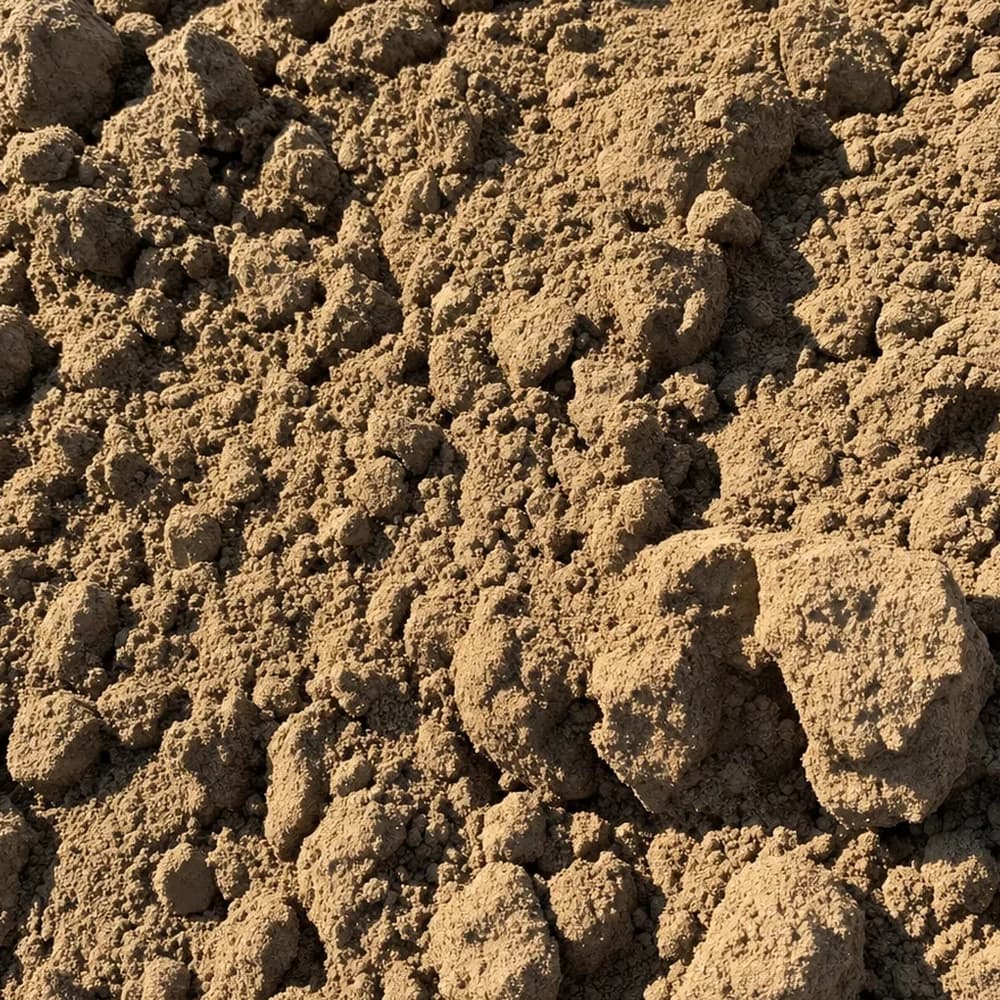
Fill dirt is mineral subsoil with the rock and debris taken out and very little organic content, which is exactly why it holds a grade and will not grow anything worth keeping. Bring the fill to within four to six inches of finished level, then finish with topsoil over the parts that need to be green.
Trench lines, berms and a corner that ponds every spring
A utility trench 40 feet long and 30 inches wide, backfilled 20 inches deep, works out at 100 square feet, 166.7 cubic feet, 6.2 cubic yards and about 7.4 tons. Trenches are the place settling shows first, because the spoil went back in loose along a narrow line that everyone then walks on.
A berm is the opposite problem: it is a shape, not a slab, so measure its footprint and use the average height across the section rather than the peak. Where water stands on flat clay, raising the ground is only half the fix. If the low spot is fed by a downspout or a ditch that backs up, the fill will move the puddle rather than remove it.
Once the yardage looks right, browse the bulk soils, set the quantity and a delivery date, and finish at checkout, where delivery is arranged by ZIP code. Fill dirt spreads best straight off the truck, so leave clear access to a spot the loader or wheelbarrow can reach without crossing the new grass, and check what the truck needs on arrival before you pick the date.
Common questions
The dip wraps around the patio corner in two legs. Is that one entry or two?
Yes. Split it into the two legs of the L, enter each as its own rectangle under the multiple-areas option, and give each its own average depth, since one leg is usually deeper than the other. The tool totals up to five areas and returns a single yardage, which is what you want on the order.
How close to the inside face of timber or steel edging should the fill come?
Stop short. Fill dirt against timber or steel edging holds water behind the board and pushes it out of line over a winter. Measure to the inside face of the edging and leave the last inch or two for whatever finishes the surface, whether that is topsoil and grass or mulch.
Which of the final inches belong to the topsoil tool rather than this one?
Calculate them as two layers of the same footprint. Bring the fill to within four to six inches of final grade and run that depth here; run the remaining four to six inches through the topsoil tool, which uses the lighter weight. Order both on one delivery, but keep the two yardages separate so you can check each line.
Should I discount the bounding rectangle for the ground inside it that is not low?
Draw the smallest rectangle that contains it and use that as your length and width. The averaged depth already accounts for the shallow ground inside the box, so do not discount the area a second time. The small surplus that leaves you is the feather-out into the surrounding lawn you were going to need anyway.
How do I average the depth along a trench line that has dropped again?
Measure the dip. Run a string or a straight board across the trench at several points, measure down to the sunken surface at each, and average those readings. That is usually an inch or two, which is a small yardage over a long run. Compact it properly this time and leave it slightly proud.
Related calculators
Cheap by the yard, free to your gate.
Screened fill dirt for grading and backfill, delivered across Michigan.