Road Base Calculator: Pad and Lane Tonnage in 21AA
Enter your project dimensions
The decision in front of most people opening a road base calculator is not the width of the pad. It is how many inches go under it, because that is the number that doubles an order while the footprint stays exactly where it was. Work one pad through and the rest of the page follows.
Sixty tons under a 32-by-48 pole barn pad
A hypothetical pole barn goes up 32 feet by 48, on ground that stays damp into May. Eight inches of compacted 21AA limestone under it, which is the band for equipment loads and soft subgrade.
On screen: rectangle, length 32, width 48, depth 8, the crusher run and road base entry in the material list, allowance box ticked.
On paper:
- 32 x 48 = 1,536 square feet
- 1,536 x 8 / 12 = 1,024 cubic feet
- 1,024 / 27 = 37.93 cubic yards
- 37.93 x 1.5 = 56.9 tons
- with 10 percent: 41.7 cubic yards, 62.6 tons
Sixty-three tons, then. Now drop the depth to six inches and the same pad comes back at 28.4 cubic yards and 42.7 tons. Two inches has taken 14 tons off the ticket, which is the whole argument for settling the depth before anything else. On the flat lake-plain clay of the southeast, where water sits through the thaw, eight inches is the honest number. On sandy west-side outwash that drains, six will carry the same building.
Filling in the pad, its apron and the turn off the county road
The form takes a rectangle, a circle by its diameter, or up to five separate areas totaled in one run. That last option is the one to use here, because a pad is rarely alone. Add a 12 by 24 apron at six inches, which is 5.33 cubic yards and 8 tons, and a 20 by 14 approach at eight inches where the drive meets the road, which is 6.91 cubic yards and 10.4 tons. Entered together with the pad, the three come back as roughly 50.2 cubic yards and 75.3 tons, or 83 tons with the allowance on.
Lengths, widths and diameters are in feet. Depth is in inches and the field runs from 0.25 to 24. Choose the material, leave the extra 10 percent ticked or untick it, and cubic yards, tons and cubic feet all appear at once. The estimate can be emailed over if you would rather have it in writing when the order goes in.
One habit saves a repeat delivery: enter the finished compacted depth you want, not the loose lift you intend to spread. Dense-graded material tightens under a plate or a roller, so four inches off the tailgate is not four inches once it has been worked.
Yards on the sketch, road base tons on the delivery ticket
Length times width gives square feet. Multiply by depth in inches and divide by 12 for cubic feet. Divide by 27 for cubic yards. Multiply by the material weight for tons.
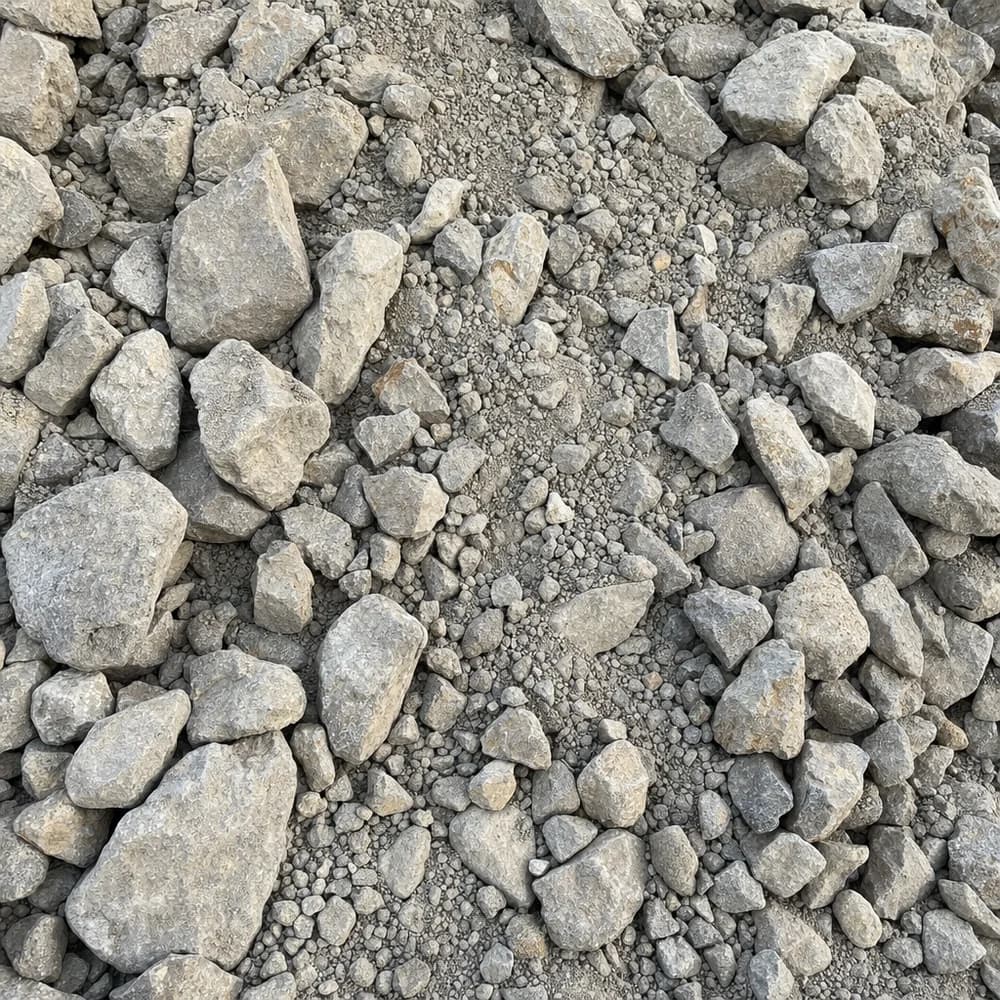
A cubic yard of 21AA runs about 3,000 lb, or 1.5 tons, because the fines fill the spaces between the stones rather than leaving them open. Clean washed grades such as #57 stone sit nearer 2,800 lb for the same volume, and stone screenings around 2,900. Those are the site's own approximate published figures, and picking the wrong line in the dropdown gives a confident answer to a different question.
Coverage is the same arithmetic read backwards. One ton of base spreads about 54 square feet at four inches compacted, 36 at six, 27 at eight and 18 at a foot.
What the allowance covers, and what a soft subgrade swallows
The checkbox is labeled for compaction and spillage, it adds 10 percent, and it is ticked when the page loads, so untick it only if you want the bare volume. Treat it as the allowance for spillage off the edge of the spread and for the dip you did not measure, not as cover for a subgrade that is going to swallow stone.
Soft ground is the other half of that. Base placed straight onto topsoil lets mud pump up through the aggregate no matter how thick the layer, so strip the organic material first. Where clay is wet or ruts have already formed, woven geotextile between soil and stone stops the two mixing and keeps the stone you paid for doing its job. Spread and compact in lifts no deeper than four inches, and crown the finished surface so water runs to the sides rather than into the base.
Timing belongs in the order as much as tonnage. Base and drive work runs from the spring thaw into late fall, frozen ground stops compaction outright, and frost laws limit heavy trucks on many county roads while the ground is coming out of frost, holding later in the northern Lower Peninsula and the Upper Peninsula than downstate.
21AA, recycled crushed concrete and what tops a finished lane
- 21AA limestone is the MDOT dense-graded class most Michigan pads, pole barns and drive bases are built on. It is crushed limestone with fines, and the class name describes how material is specified here rather than a certification anyone selling it holds.
- 22A road gravel is a separate class with a smaller top size, used as the running surface on unpaved drives and private roads. Size that layer with the 22A tool so the two depths stay apart in your notes.
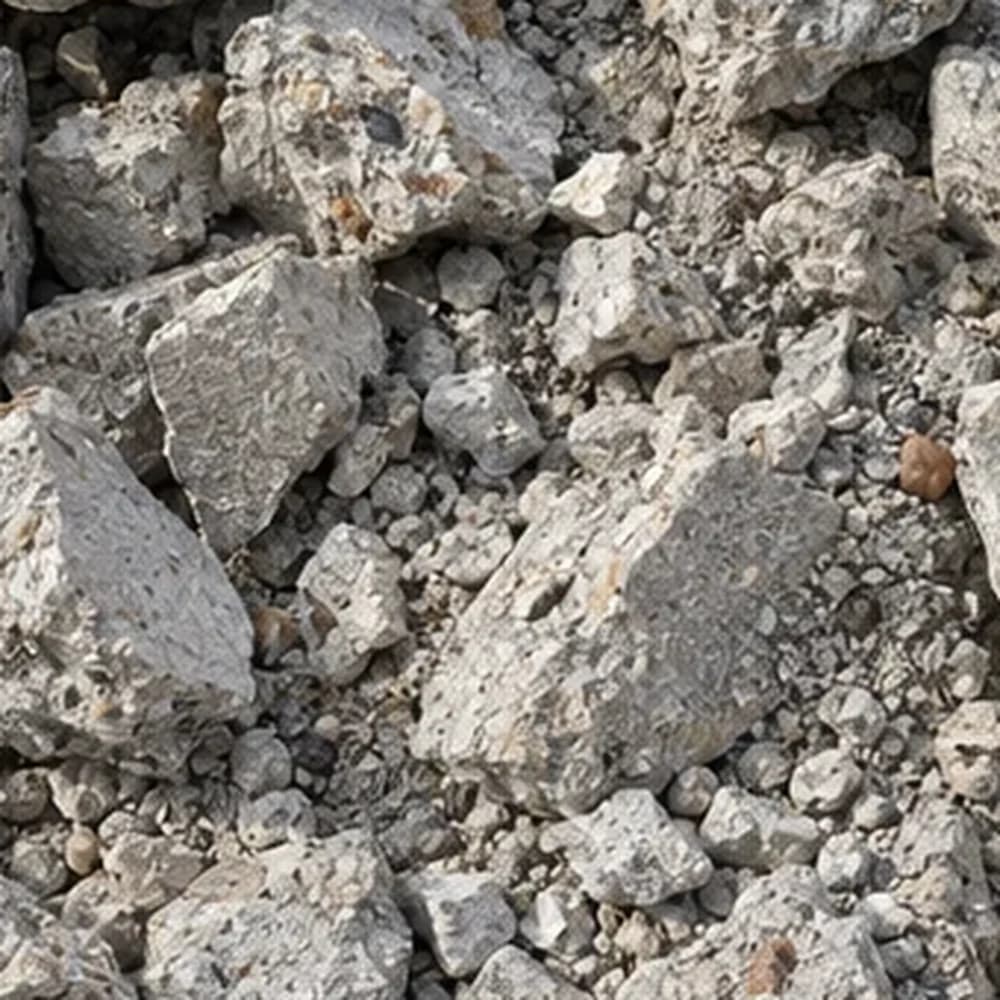
- Recycled 21AA crushed concrete is common on private Michigan lanes and figures at the same 1.5 tons per yard. Check what the county specification allows before substituting it.
- Driveway gravel or 3/4 inch stone goes over a compacted base when you want a tidier surface to drive and look at.
- Neither dense-graded class belongs in a drain. The fines that make them lock together also hold water, which is what drain rock is for.
With the tonnage settled, open the product page, set a quantity and a delivery date that clears the frost laws, and finish at checkout, where delivery is arranged by ZIP code. Ask for the drop at the far end of the run so the machine spreads back toward the pile rather than over finished work.
Common questions
Should the pad be figured to the building footprint or wider than it?
Wider. Carry the base a foot or two past the slab or the posts on every side so the edge is not the first thing to break down under a wheel. On the 32 by 48 example, an extra foot all round is another 164 square feet, which is about 6 more tons at eight inches.
The top two inches are a different material from the base. How do I keep the two orders straight?
Run the tool twice on the same footprint, once at the base depth and once at the surface depth, and change the material each time. The volumes are separate and so are the weights, since the base is figured at 1.5 tons a yard and a clean surface stone nearer 1.4. Keep them as two lines rather than one total.
The parking area fans out into a teardrop beside the barn. What do I enter for that?
Box it in. Take the smallest rectangle that contains the shape, then estimate what fraction of that box is really being stoned, usually somewhere between two thirds and three quarters, and scale the yardage by that fraction. For a shape closer to round, the circle option and one diameter will get you there faster.
The pad has only gone soft in patches. How do I measure a top-up?
Lay a straight board across each soft area, measure down to the surface at a few points and average those readings. Enter the patches as separate areas, up to five in one run. Most top-ups come back as an inch or two over a small footprint, which is a fraction of a ton, so it is usually worth combining them with other material on the same delivery.
What happens if I come up a few tons short with the building going up next week?
You finish thin somewhere, and thin base is where a pad fails first. Short loads also mean a second delivery for a strip you can see from the road. Round up to the next whole ton and leave the balance in a corner; base stone keeps indefinitely and there is always a soft spot in a drive that wants it.
Related calculators
Thirty tons. Zero delivery fees.
Road base priced per ton, hauled free, at lane quantities where hauling usually costs the most.