Crusher Run Calculator: Sizing a 22A Lane in Tons
Enter your project dimensions
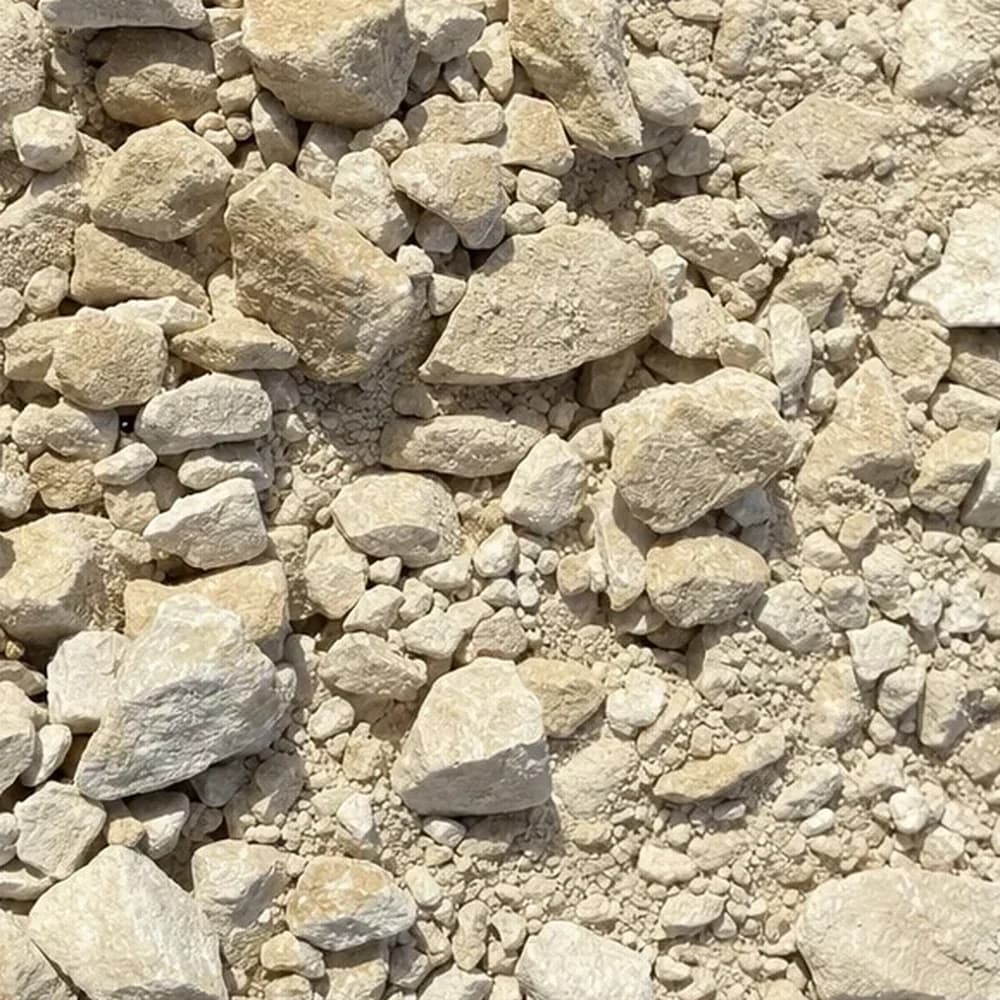
A lane that has been through a Michigan thaw tells you plainly what it wants. Ruts down both wheel tracks, a soft patch where the ditch drains across it, stone shoved out to the shoulders by the plow. Before the arithmetic there is a class decision, and this crusher run calculator will not make it for you: 22A road gravel for the running surface of an unpaved drive, or 21AA limestone under a pad that has to carry weight. Both are dense-graded, both are figured at 1.5 tons per cubic yard, and they are not the same material.
A 120-foot lane at five compacted inches
Say the lane runs 120 feet from the road to a turnaround and carries 12 feet of driving width, rebuilt to five inches of compacted 22A. This is a hypothetical job, but the numbers behave the same on a real one.
On screen: rectangle, length 120, width 12, depth 5, material set to the crusher run and road base entry, allowance box ticked.
On paper:
- 120 x 12 = 1,440 square feet
- 1,440 x 5 / 12 = 600 cubic feet
- 600 / 27 = 22.2 cubic yards
- 22.2 x 1.5 = 33.3 tons
- with the 10 percent allowance: 24.4 cubic yards, 36.6 tons
So the order is 37 tons. Now change one number. Run that same lane at six inches instead of five and it becomes 26.7 cubic yards and 40 tons, 44 with the allowance. One inch of depth on a lane this size is seven tons of stone. The tape measure is the easy part; the depth field is where the money moves.
Feeding a two-track, a turnaround and a parking spur into one estimate
Three shapes are offered. Rectangle handles the straight run. Circle takes a single diameter, which suits a turnaround loop: a 28-foot circle covers about 616 square feet, and at four inches that is 7.6 cubic yards or 11.4 tons on its own. Multiple areas totals up to five pieces in one calculation, so the lane, the loop and the spur beside the pole barn come back as a single tonnage rather than three numbers you add up badly at the kitchen table.
Lengths, widths and diameters go in feet. Depth goes in inches and the field accepts anything from 0.25 to 24. Pick the material, leave the extra 10 percent for compaction and spillage ticked or untick it, and the result appears as cubic yards, tons and cubic feet at once. There is an option to have the estimate emailed over if you want it beside you when the order goes in.
Why 22A comes back heavier than clean stone
The formula is short enough to check on a phone. Length times width gives square feet. Multiply by depth in inches and divide by 12 to get cubic feet. Divide by 27 for cubic yards. Multiply cubic yards by the material weight for tons.
That last figure is the one people trip over. A cubic yard of 22A or 21AA runs about 3,000 lb, or 1.5 tons, because the fines pack into the spaces between the stones instead of leaving them open. Clean washed stone such as #57 sits nearer 2,800 lb, or 1.4 tons, for the same hole in the ground. Stone screenings come in around 2,900 lb. All three are approximate figures the site publishes, and picking the wrong one in the dropdown will give you a confident answer to the wrong question.
Ordering to the depth the roller leaves behind
Dense-graded material tightens roughly 10 to 15 percent from loose truck volume once it is compacted. That has a practical consequence for how you fill in the depth box: enter the finished depth you want after rolling, not the loose lift you plan to spread. Four inches measured off a tailgate is not four inches once a plate compactor has been over it.
The 10 percent allowance covers spillage, the dip you did not measure and the handful of yards that disappear into soft spots. On a long lane it is worth rounding the result up to the next whole ton as well, because the cost of a short load is a second delivery for a strip you can see from the road.
Timing matters as much as tonnage here. Work on bases and drives runs from the spring thaw into late fall, and frost laws limit heavy trucks on many county roads while the ground is coming out of frost. In the northern Lower Peninsula and the Upper Peninsula those restrictions can hold after they have lifted downstate. Pick a delivery date with that calendar in mind rather than the first dry weekend.
21AA below, 22A on top, and what goes nowhere near a drain
- 22A road gravel is the MDOT dense-graded class with the smaller top size, used on unpaved drives and private roads and as base. It packs hard and sheds water off a crowned surface.
- 21AA limestone is the coarser dense-graded class most Michigan drives and pole barn pads are based on. Use the 21AA and road base tool for that layer so the depths stay separate in your notes.
- Driveway gravel or 3/4 inch stone finishes a lane that you want to look and drive better than raw 22A.
- Neither class belongs in a French drain. The fines that make them lock together also hold water, so drain rock does that job, particularly on the slow-draining clay of the southeast lake plain.
Class designations describe how material is specified here, not a certification held by anyone selling it. When your tonnage looks right, open the product page, set the quantity and choose a date, and delivery is arranged at checkout by ZIP code. Leave the truck a firm, clear spot to dump at the far end of the run so you can spread back toward the pile.
Common questions
Do I measure the lane at its driving width or out to the grass edge?
Measure the width you actually want stone on, then add the shoulder only if you intend to build it. A 12-foot lane with a foot of stone spilling each side is a 14-foot lane as far as the tonnage goes, which on 120 feet is another six tons or so. If the edges are already sound and only the tracks are worn, leave them out.
I want 22A underneath and a finer surface on top. Is that two runs of the tool?
Yes, and keep them separate. Run the lane once at the compacted base depth with the crusher run setting, then run the same footprint again at two or three inches for the surfacing course with that material selected. The volumes stack, but the weights differ, so adding the depths together in one pass gives you the wrong tonnage for one of the layers.
My drive bends around a stand of pines rather than running straight. How do I measure that?
Walk the center line with a measuring wheel for the length and use your normal driving width, then treat the bend as its own area if it widens out. The multiple-areas option takes up to five pieces, so a straight run plus a wide sweep plus a turnaround go in as three. Squaring a curve off generously costs less than coming up short on the outside of the bend.
The lane only needs the ruts filled. What depth do I enter?
Measure the depth of the ruts in several places and use the average, not the worst one. Then decide honestly: patching or resurfacing? If the average comes out over two inches, the surface has gone and a full lift over the whole width will last longer than chasing hollows. For genuine patching, enter each bad stretch as its own area at its own depth.
What actually happens if the load runs out before the last stretch?
You get a visible seam where the new stone stops, and the untreated end keeps rutting and pulls the new work apart from the edge. Finishing thin across the whole lane is worse still, because a shallow layer over soft subgrade breaks up in the first thaw. If the number looks borderline, round up.
Related calculators
Base tonnage sorted? Good.
Crusher run by the ton, the cheapest structure on the yard, delivered free.